The Unsung Science of Comfort: Why a Headphone’s Fit is as Important as its Sound

It’s a tale as old as audio: you spend weeks reading reviews, comparing frequency response charts, and finally pull the trigger on a pair of headphones that promise sonic bliss. You unbox them, plug them in, and the sound is everything you dreamed of. But then, thirty minutes later, a dull ache begins to form on your ear cartilage. An hour in, there’s a distinct pressure point on the top of your head. By the end of the movie or album, you’re ripping them off, your relief palpable. The headphones, for all their audio prowess, are relegated to a desk ornament, a monument to a failed relationship.
This experience is universal, yet we often blame ourselves. “Maybe my head is the wrong shape,” we think. The truth is, the fault often lies in a systematically overlooked aspect of product design: ergonomics.
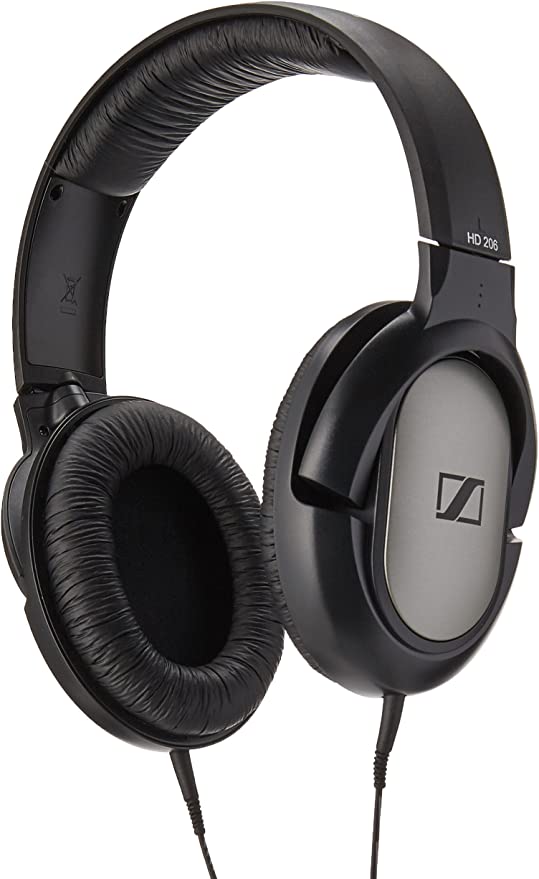
In the pursuit of audio perfection, we’ve been taught to obsess over drivers, codecs, and sound signatures. But the physical interface between the device and your body is just as, if not more, critical to your overall experience. Let’s explore the unsung science of comfort, using a thoughtfully designed, unpretentious model like the Sennheiser HD 206 as our guide. Its design choices reveal the three pillars that support a comfortable, long-term listening experience.

Pillar 1: The Burden of Weight
The most straightforward ergonomic factor is weight. It’s a simple equation governed by gravity: Mass x Acceleration = Force. The heavier a pair of headphones is, the more force it exerts on your head and neck. While you might not notice it for a few minutes, over hours, your muscles are performing constant, low-level work to support that extra load. This leads to fatigue, strain, and sometimes even tension headaches.
The Sennheiser HD 206 weighs in at a mere 6.1 ounces (about 173 grams). This isn’t an accident; it’s a deliberate choice. By using lightweight polymers and a minimalist construction, designers drastically reduce the static load on your body. When you pick them up, they feel unassuming. When you wear them for three hours during a study session or a long gaming marathon, that unassuming feeling translates into something profound: you forget they are even there.
Ergonomic Takeaway: When shopping, always check the weight specification (usually in grams). Lower is almost always better for long-term comfort. Anything under 250g is generally considered lightweight.
Pillar 2: The Pressure Problem (Clamping Force & Distribution)
If weight is the vertical force, clamping force is the horizontal one. This is the “squeeze” the headphones apply to the sides of your head to keep them in place. Too little, and they slide off. Too much, and you feel like your head is in a vise. But the force itself is only half the story. The other, more important half is pressure.
The key formula from high school physics is Pressure = Force / Area. You can have a significant clamping force, but if you distribute it over a large area, the pressure at any single point is low. This is the genius of the over-ear (circumaural) design seen on the HD 206.
Instead of pressing directly on your sensitive ear cartilage (the pinna)—a small, complex surface area—over-ear pads rest on the much larger, more robust area of your skull around the ear. By dramatically increasing the contact area, they significantly reduce the pressure. This simple change in geometry is the difference between lasting comfort and acute pain after 20 minutes. The wide, soft padding of the headband serves the same purpose for the downward force, preventing the dreaded “hotspot” on the top of your scalp.
Ergonomic Takeaway: Look for large, encompassing earpads that go around your ear, not on it. A wide, well-padded headband is equally important. These features are your best defense against pressure-related pain.
Pillar 3: The Microclimate Crisis (Heat & Breathability)
The final pillar of comfort is managing the microclimate you create by sealing a part of your body off from the open air. Your skin is constantly regulating temperature and humidity by breathing and sweating. When you place a headphone earcup over your ear, you create a tiny, sealed ecosystem.
Without proper ventilation, heat and moisture build up. This leads to that familiar hot, sweaty, and uncomfortable feeling, especially during long sessions. The choice of earpad material is critical here. While materials like protein leather or leatherette (common on the HD 206 and many others for their durability and good seal) are effective for sound isolation, they are not very breathable. Other materials, like velour or fenestrated (perforated) pads, sacrifice some isolation for significantly better airflow and heat dissipation.
This is an area of compromise. A design like the HD 206 prioritizes the acoustic seal, making it great for focused listening, but you may need to take short breaks to let your ears “breathe.” More expensive headphones often offer swappable earpads, allowing you to choose between isolation and breathability based on your activity.
Ergonomic Takeaway: Consider your primary use case. For intense, short-term focus, a leatherette pad is fine. For all-day wear, especially in a warm environment, look for more breathable materials like velour or investigate if aftermarket breathable pads are available for your chosen model.

Conclusion: Your Body is the Ultimate Reviewer
Ergonomics isn’t a luxury feature; it’s the foundation of a usable and enjoyable product. A headphone with world-class sound you can only stand to wear for 15 minutes is ultimately a failed design.
By learning to think like an ergonomist—by considering weight, pressure distribution, and thermal comfort—you can demystify the “feel” of a product. You can look at a pair of headphones online and make an educated guess about its long-term comfort. But most importantly, it empowers you to trust your own body. The next time you try on a pair of headphones, don’t just listen to the sound. Listen to what your ears, your head, and your neck are telling you. They are the most honest reviewers you will ever find.