
The Gym vs. Open-Ear Headphones: An Acoustic Mismatch Explained
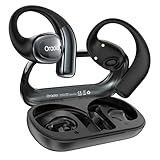
It’s a common and frustrating scenario: you’ve purchased a new pair of open-ear headphones specifically for “sports,” but when you get to the gym, the experience falls flat. As one user of an open-ear model noted, “when I’m at the gym i can barley hear the headphones versus what was going on in the gym.”
This isn’t a sign of a defective product. It’s the predictable result of a fundamental conflict between a specific technology and a specific environment. The open-ear design is a powerful tool, but the loud, bass-heavy gym is its acoustic kryptonite.
Understanding this mismatch is key to finding the right audio gear for your workout. Let’s explore the science behind this common problem.
The Science of “Masking”: Why Gyms Defeat Open-Ear Audio
The primary benefit of open-ear headphones, like the Oraolo OE01, is situational awareness. They are engineered to not seal your ear canal, allowing you to hear traffic, cyclists, and announcements. However, this “openness” means they have no defense against a phenomenon called acoustic masking.
In psychoacoustics, masking occurs when a loud sound prevents you from hearing a quieter sound, especially when they share similar frequencies. Gyms are a worst-case scenario for this:
* Constant Low-Frequency Noise: The thud of weights, the hum of treadmills, and the gym’s own overhead music create a powerful, low-frequency “noise floor.”
* Bass Leakage: Open-ear designs inherently “leak” bass (low-frequency sound) because there is no acoustic seal.
When you combine the gym’s loud, bass-heavy noise floor with the headphone’s leaking bass, your music is effectively “masked” or drowned out. The sound you perceive is thin, distant, and unsatisfying. This is a law of physics, not a manufacturing flaw.
The Engineering Counter-Move: Can a 16.2mm Driver Win?
Engineers are well aware of this physical limitation. To compensate for the lack of a seal, many open-ear models, such as the Oraolo OE01, employ oversized drivers. At 16.2mm, its driver is massive compared to the 6mm-10mm drivers in typical earbuds.
The purpose of this large driver is to move a greater volume of air, pushing more sound energy toward your ear to “overpower” the leakage and compete with the ambient noise. This engineering solution significantly improves the fullness and bass response compared to a smaller open-ear driver.
However, in the high-decibel environment of a gym, even this powerful driver can’t fully overcome the laws of acoustic masking. It’s an engineering solution pushing against a hard physical limit.

The Right Tool for the Right Sport: Where Open-Ear Shines
This begs the question: if not the gym, what kind of “sport” are these headphones for? The answer lies in their other key features, such as an IPX5 water-resistant rating.
An IPX5 rating means the device is built to withstand sweat, rain, and sustained water spray. This durability, combined with the lightweight, non-intrusive open-ear fit, points directly to its ideal use cases:
* Outdoor Running & Cycling: This is the ultimate scenario. You get your music, but you remain 100% aware of approaching cars, cyclists, and other potential hazards. The IPX5 rating handles any weather or sweat.
* Home Workouts: When you need to hear your workout cues while also listening for a package delivery or a family member.
* Office & Commuting: Allows you to listen to audio while remaining available to colleagues and aware of public transit announcements.
The inclusion of AI Noise-Canceling for the dual microphones further reinforces this. It’s designed to ensure that while you can hear your surroundings, the person you’re on a call with cannot.
Conclusion: Match Your Tech to Your Terrain
Open-ear headphones are not a universal replacement for traditional earbuds. They are a specialized tool for users who must prioritize safety and environmental awareness over total audio immersion.
If your primary workout location is a loud gym, an in-ear or over-ear model with a strong seal (and preferably Active Noise Cancellation) will be a much better fit.
But if you are a runner, cyclist, or multi-tasking professional who needs to blend your digital life with your physical world, an open-ear design is the superior choice. Devices like the Oraolo OE01 are engineered precisely for this purpose, balancing audio performance with a design that keeps you safely and comfortably connected to the world around you.