
The Economics of the Bag: Analyzing the ‘Razor and Blades’ Model in Home Cleaning
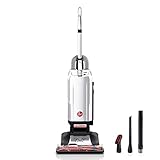
In business school, the “Razor and Blades” model describes a strategy where a base unit is sold cheaply (the razor), while profits are made on the consumables (the blades). The Hoover UH30651, a robust yet affordably priced vacuum, fits this model perfectly. You buy the vacuum once, but you buy bags forever.
Consumers often recoil at this, viewing the ongoing cost of bags as a “tax.” However, a deeper economic analysis reveals that this model often benefits the consumer in terms of Total Cost of Ownership (TCO) and Asset Longevity. Paying for bags might actually be the cheapest way to own a high-performance vacuum.
The Bag as an Engine Shield
Why do bagless vacuums often die after 3-5 years? The answer lies in dust infiltration. In a bagless unit, fine dust that bypasses the cyclones hits the pre-motor filter. If this filter isn’t washed perfectly and frequently (which few users do), dust enters the motor assembly. This dust grinds down bearings and overheats the windings.
In a bagged system like the Hoover UH30651, the bag is the primary shield. It stops 99% of debris before it ever gets near the mechanical heart of the machine. By treating the filter as a disposable item, you ensure that the motor is always breathing through clean material. This structural protection significantly extends the lifespan of the motor. A $20 pack of bags over a year is a small insurance premium to protect a machine that can last 10-15 years.
Height Adjustment and Mechanical Efficiency
Efficiency isn’t just about filtration; it’s about mechanical interaction. The Hoover UH30651 features a 4-Level Height Adjustment. This manual control allows the user to optimize the airflow seal and brush roll contact for different surfaces.
While auto-adjusting heads exist, manual adjustment is a hallmark of durable, mechanical design. It reduces complexity (fewer sensors to fail) and gives the user control over the “drag” on the motor. Setting the right height reduces strain on the belt and motor, further contributing to the machine’s longevity. It is a philosophy of “Simple Mechanics, Long Life.”

The Universality of the Consumable
The risk of the “Razor and Blades” model is obsolescence—what if they stop making the blades? Here, the Hoover UH30651 benefits from its heritage. It uses standard Type Y / Type Z bags, which are ubiquitous.
Unlike proprietary battery packs for cordless vacuums that disappear from the market after a few years (rendering the vacuum useless), standard vacuum bags are a commodity. Third-party manufacturers ensure a competitive market, keeping prices low and availability high. This Universal Compatibility guarantees that the vacuum remains serviceable for decades, insulating the owner from the planned obsolescence of the tech-heavy cordless market.
Conclusion: The Value of Recurring Investment
When we shift our perspective from “cost” to “value,” the bagged vacuum emerges as a financially sound choice. The ongoing purchase of bags is not a penalty; it is a reinvestment in the machine’s performance. By accepting this small recurring cost, we gain a tool that offers superior hygiene, simpler maintenance, and a lifespan that outlasts the disposable trends of the modern appliance market.