
The Psychology of Keyless Living: How Smart Locks Reshape Our Sense of Home and Security
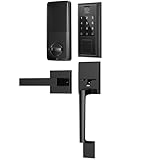
For millennia, the relationship between a person and their home has been mediated by a simple, tangible object: the key. The weight of it in a pocket, the distinct sound of it turning in a lock—these are deeply ingrained sensory cues that signify transition, safety, and ownership. The smart lock proposes to erase this artifact, replacing a physical ritual with a fingerprint scan, a passcode, or a tap on a screen. This transition is far more than a mere technological substitution. It is a profound psychological shift that redesigns our daily routines, alters our perception of security, and fundamentally reshapes the trust we place in the technology that guards our most personal space. Understanding the user experience of a smart lock is not about listing features; it’s about exploring the human-computer interaction at the very threshold of our lives.

Stage 1: The Expectation – The Promise of Effortless Living
The journey begins with a promise. The allure of a smart lock is rooted in the fantasy of a frictionless life. It’s the promise of no more fumbling for keys in the rain with arms full of groceries, no more panic about whether you locked the door on your way to the airport, no more costly locksmith calls. This vision of convenience is a powerful motivator. However, this initial optimism is tinged with a nascent anxiety: can a piece of consumer electronics be trusted with a task as critical as a half-pound of forged brass and steel? This internal debate—convenience versus trust—is the central psychological tension that a well-designed smart lock must resolve from the very first moment.
Stage 2: The Installation – The First Test of Trust
The unboxing and installation process is the user’s first tangible interaction with the device, and it is a critical “moment of truth.” A confusing manual, poorly fitting parts, or an unclear setup process can shatter the user’s confidence before the lock is even on the door. A user review mentioning a “handle started coming loose” points to a failure not just in mechanical design, but in the user’s initial trust-building exercise. A secure fit and straightforward, step-by-step instructions are paramount.
Similarly, the app onboarding process—enrolling that first fingerprint or setting the first passcode—is a delicate handshake between user and machine. A successful enrollment is rewarding; it feels like the lock is learning and recognizing you. A failed attempt, as one user review lamented (“I’d say I could count the times it worked on 1 hand”), is deeply frustrating. It introduces doubt and cognitive load, forcing the user to question either their own competence or the device’s reliability. This initial setup phase must be, in the words of UX pioneer Steve Krug, “don’t make me think.” It must build, not erode, the user’s sense of control.
Stage 3: The Daily Ritual – Habit, Feedback, and Flow
Once installed, the smart lock begins to integrate into the user’s daily life, replacing the old key ritual with a new one. The success of this integration hinges on two core HCI principles: feedback and consistency. When you place your finger on the sensor, you expect immediate and clear feedback—a soft chime, a green light, the satisfying clunk of the deadbolt retracting. This sensory confirmation is vital. It closes the feedback loop and affirms that the action was successful. A keypad that “fails to turn on so u can’t see the numbers in the dark” is a catastrophic failure of this principle, creating uncertainty and anxiety at the very moment security is most salient.
A well-designed smart lock should facilitate a state of “flow,” where the act of entering one’s home becomes automatic and seamless. The technology should become invisible. This is why multi-modal access (fingerprint, code, card, etc.) is so powerful from a UX perspective. It offers a cognitive safety net. If one method fails (e.g., a wet finger), the user knows they have immediate, reliable alternatives. This redundancy prevents a minor hiccup from escalating into a major point of stress, thereby preserving the user’s trust in the overall system. The auto-lock feature presents a fascinating psychological trade-off. While it provides peace of mind against forgetfulness, it can also introduce a new low-level anxiety: “Did the door actually lock?” This is often why users find themselves checking the app for confirmation, seeking to close that mental feedback loop.

Stage 4: The Extension of Trust – Granting Access to Others
Granting access to others is perhaps the most socially and psychologically complex function of a smart lock. When you give someone a physical key, you are bestowing a significant amount of trust in a single, permanent act. The smart lock atomizes this trust into granular, controllable permissions. Creating a temporary code for a dog walker that only works from 2 PM to 3 PM on weekdays is a powerful new form of mediated trust.
This functionality transforms the homeowner from a simple gatekeeper into a sophisticated access manager. It reduces social friction—there’s no need to coordinate a key handoff with a guest. However, it also introduces new responsibilities. The user interface for managing these permissions must be impeccably clear. The user needs to be absolutely certain what kind of access they have granted, to whom, and for how long. Ambiguity in this interface could lead to significant security and social blunders.
Stage 5: The Moment of Failure – The Ultimate Test of the System
No technology is perfect. Batteries will die, apps will crash, and fingerprint sensors will fail to read. The true measure of a smart lock’s design is not how it performs when everything works, but how it behaves when something goes wrong. This is when the user’s carefully constructed trust is most vulnerable.
A user review stating “the number doesn’t work!” after calling a defunct support line is a total system failure. A well-designed system anticipates these moments. It provides clear, early low-battery warnings. It includes an emergency power option, like a Type-C port, for when those warnings are ignored. Most critically, it includes a non-electronic fail-safe: the mechanical key. The humble key, the very object the smart lock seeks to replace, becomes the ultimate symbol of trust and reliability in a moment of crisis. Its inclusion is an admission of technological fallibility and a profound gesture of user-centric design, assuring the user that they will never, ever be truly locked out.
In conclusion, the transition to keyless living is a journey of trust. A successful smart lock is not just a collection of features; it is a carefully choreographed experience designed to build and maintain that trust at every step. It must be mechanically sound, digitally intuitive, rich in feedback, and forgiving in failure. It must understand that it is not just opening a door; it is upholding a deeply personal and psychological contract of safety and reliability with the person who calls that place home.