
The ‘Chi-Fi’ Revolution: How Economic Forces and Open-Source Tech Redefined High-Fidelity Audio

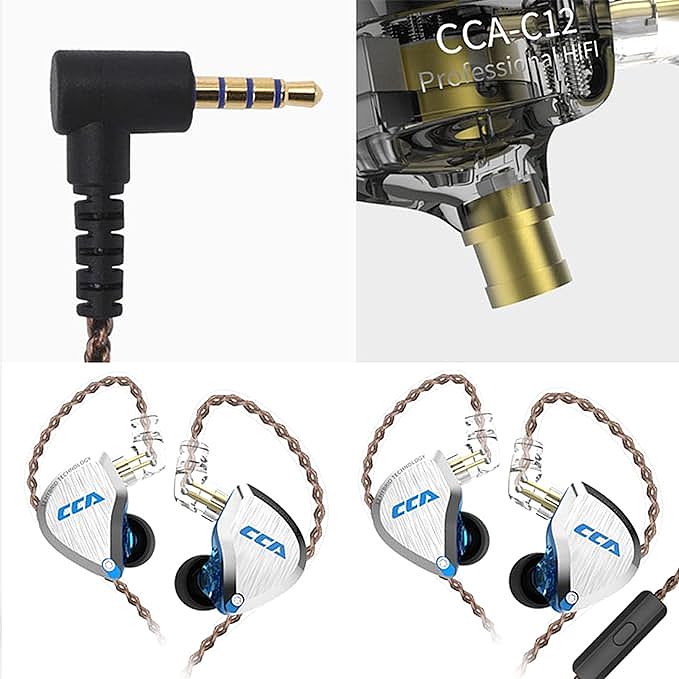
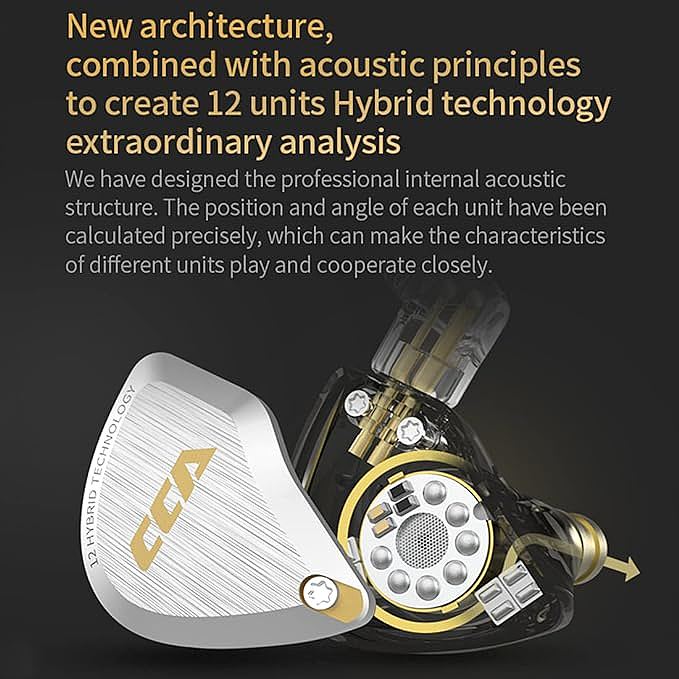
Consider an anomaly. An in-ear monitor, crafted from a zinc alloy and resin, housing a complex six-driver hybrid system inside each earpiece, lands on your doorstep for about 50. A decade ago, this combination of materials and technology would have been the preserve of boutique audio labs, carrying a price tag easily ten to twenty times higher. Today, it is a commonplace reality. This isn’t just a story about one product, like the CCA C12, being inexpensive. It is a story about a seismic shift in the landscape of high-fidelity audio, a phenomenon known as “Chi-Fi.” Chi-Fi, a portmanteau of “Chinese Hi-Fi,” represents more than just a country of origin. It signifies a new paradigm of product development, manufacturing, and distribution that has fundamentally disrupted the global audio market. To understand how a 50 IEM can challenge a $500 one, we must look beyond its drivers and wires and examine the powerful currents of technology, economics, and culture that made it possible.
The Seeds of Revolution: Democratizing the Core Technology
The Chi-Fi explosion did not happen in a vacuum. It was predicated on the democratization of previously proprietary or expensive core technologies, most notably the balanced armature (BA) driver. For years, the production of these miniature, high-precision drivers was dominated by a few key players, keeping costs high.
As patents expired and manufacturing techniques matured and spread, the cost of BA drivers plummeted. Suddenly, the essential building blocks for creating sophisticated multi-driver IEMs were no longer the exclusive domain of established, high-margin brands. This technological accessibility, combined with a burgeoning online community of hobbyists and DIYers sharing tuning techniques and measurement data, created a fertile ground for experimentation. An open-source knowledge base began to form, lowering the barrier to entry for designing a competent audio product.
But having access to the building blocks is one thing; assembling them into a finished product cheaply and quickly is another. This is where the geographical and economic powerhouse of Shenzhen enters the story.
The Engine Room: The Shenzhen Speed
The city of Shenzhen, and the surrounding Pearl River Delta, is the undisputed epicenter of global electronics manufacturing. It is not merely a collection of factories; it is a hyper-connected, vertically integrated ecosystem.
This ecosystem provides Chi-Fi brands with what is known as “Shenzhen Speed.” A product idea can go from concept to prototype to mass production in a matter of weeks, not months or years. This is possible because the entire supply chain—from driver manufacturers and CNC milling shops to cable suppliers and packaging printers—exists within a few square miles. This proximity and competition fosters incredible efficiency and drives down costs. Brands can rapidly prototype dozens of models, A/B test different tunings, and bring the successful iterations to market with unprecedented agility, overwhelming the slower, more deliberate product cycles of traditional audio companies.
The New Marketplace: From Retail Shelves to Online Carts
This high-speed production engine is coupled with a direct, internet-native business model. Most Chi-Fi brands have eschewed the traditional path of distributors, retailers, and the associated markups. Instead, they sell directly to consumers (D2C) through global platforms like AliExpress, Amazon, and dedicated audio e-commerce sites.
This D2C model is amplified by a unique form of community-driven marketing. Instead of expensive ad campaigns, brands rely on a global network of independent reviewers, forums, and social media communities. A new model can be seeded to a handful of influential YouTubers, and within days, a “hype train” can build around it, generating thousands of sales. This creates a direct feedback loop: the community’s response to one model immediately informs the design of the next, further accelerating the iterative cycle.
This direct, hyper-efficient model allows for incredible prices, but it also creates a market with fewer gatekeepers and traditional checks and balances. This leads to the central paradox of the Chi-Fi revolution: its greatest strengths are also the source of its most significant weaknesses.
The Price of Progress: A Double-Edged Sword
The Chi-Fi phenomenon has been undeniably beneficial for the consumer in many ways, primarily by delivering an unprecedented performance-to-price ratio. However, this progress comes with trade-offs.
- The Pros: The relentless competition has spurred innovation in driver configurations and design at the budget end of the market. It has made high-fidelity sound more accessible than ever before, forcing legacy brands to re-evaluate their own pricing and product strategies.
-
The Cons: The “Wild West” nature of the market can lead to significant issues. Quality control can be inconsistent, with noticeable variations between different units of the same model. The pursuit of “impressive” on-paper specs can lead to aggressive, sometimes harsh, sound tuning that prioritizes perceived detail over natural timbre. Furthermore, for every successful brand that survives, there is a graveyard of short-lived brands that release one or two products and disappear, leaving customers with no after-sales support.
Conclusion: More Than Just Headphones
The rise of Chi-Fi is not merely an audio story. It is a powerful case study in 21st-century manufacturing, globalized supply chains, and digitally native commerce. It demonstrates how the convergence of accessible technology, a concentrated manufacturing ecosystem, and direct-to-consumer internet channels can radically disrupt an established industry.
Products like the CCA C12 are the tangible artifacts of these immense underlying forces. They represent a new value equation, but also a new set of considerations for the consumer. Looking at a Chi-Fi product, we are seeing more than just an earphone; we are seeing a glimpse into the future of how many of our consumer electronics will be designed, built, and sold. It’s a future that is faster, cheaper, and more directly connected to the consumer than ever before—for better and for worse.