Beyond the Beep: The Quiet Science of Your Digital Thermometer

We’ve all been there. The flush in the cheeks, the warmth radiating from a forehead, the general sense of being unwell. In these moments, we reach for a small, unassuming plastic device: the digital thermometer. We place it, wait for the beep, and trust the number that appears on its tiny screen. It’s a simple ritual, one of the most common acts of home healthcare. But have you ever paused to consider the quiet science packed into that slender tool? Have you wondered what separates a frustratingly inconsistent reading from a genuinely reliable one?
The truth is, while we know how to use a thermometer, few of us truly understand the technology we’re entrusting with critical health decisions. This isn’t just about one brand or model; it’s about the entire category of devices we depend on. Using the well-designed iProven digital thermometer as our example, we’re going to deconstruct this everyday object. By the end, you’ll not only appreciate the science that powers its precision but also possess the knowledge to master its use, transforming it from a simple gadget into a truly reliable health partner.

The Anatomy of a Modern Thermometer: An Ergonomic Design
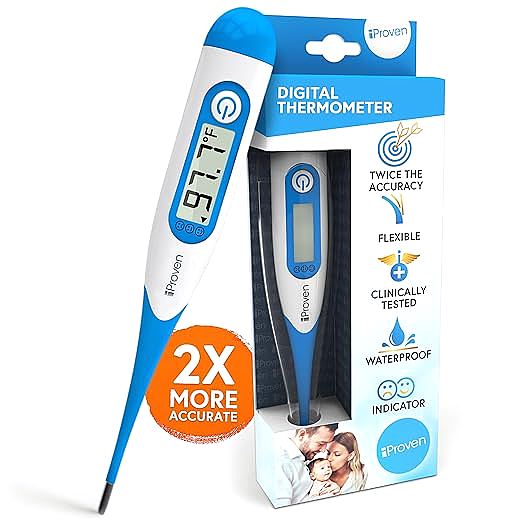
Before we dive into the internal electronics, let’s appreciate the thoughtful external design of a modern thermometer. Its form is not accidental; every curve and material choice is a deliberate decision balancing comfort, safety, and hygiene. The most notable feature is often the soft, flexible tip. This is far more than a minor comfort upgrade. For infants and toddlers, where the American Academy of Pediatrics (AAP) considers a rectal temperature the most accurate method, a flexible probe significantly reduces discomfort and the risk of injury during this sensitive procedure. It transforms a potentially stressful situation into a more manageable one for both child and parent.
This focus on practical use extends to its construction. The waterproof body serves a dual purpose. Primarily, it allows for thorough and easy cleaning—a non-negotiable hygiene feature for a device used orally or rectally, crucial for preventing the spread of germs. Secondarily, this sealing protects the sensitive internal components from humidity and accidental spills, contributing to the device’s longevity. Finally, the inclusion of a durable hard case is not a mere accessory. It’s an essential part of the system. It not only keeps the thermometer clean but, critically, protects the delicate sensor in the probe from physical impacts that could compromise its calibration and future accuracy. But this thoughtful external design is merely the housing for the true magic. To understand why this device is so reliable, we need to look deeper, past the plastic shell, and into its electronic heart.
The Heart of the Matter: How a Digital Thermometer Actually Works
At the core of your digital thermometer is a tiny, incredibly clever component called a thermistor—specifically, an NTC (Negative Temperature Coefficient) thermistor. You can think of it as a highly sensitive electronic gate for electricity. With an NTC thermistor, as its temperature increases, its resistance to electrical current decreases. When you place the thermometer’s tip under your tongue, the thermistor begins to warm up. The device’s microprocessor sends a tiny, known amount of current through it and measures how much resistance it encounters.
As your body heat warms the sensor, the resistance drops in a predictable way. The microprocessor is constantly measuring this change, and by referencing a pre-programmed conversion chart in its memory, it can translate that specific resistance value into a precise temperature reading—often accurate to within ±0.2°F (±0.1°C) under proper conditions. It’s an elegant process of converting a physical property (heat) into an electrical signal, and then into a number we can understand.
You may have noticed that devices like the iProven deliver a reading in as little as 20 seconds. This isn’t a shortcut that sacrifices accuracy. It’s the work of a predictive algorithm. The microprocessor analyzes the rate of temperature change in the first few seconds of measurement. Based on this curve, it can accurately predict the final, stable temperature long before it’s actually reached, significantly shortening the waiting time—a small piece of code that makes a huge difference in user experience, especially with an impatient child.

From Sensor to Screen: Making Sense of the Reading
So, a tiny, intelligent sensor has done its job, translating a physical property into a digital signal. But how does that signal become a clear, actionable piece of information for a worried parent or a meticulous health tracker? The journey from the sensor to the screen is all about user-friendly interpretation. The most obvious element is the clear, backlit LCD screen that eliminates the guesswork of old mercury thermometers.
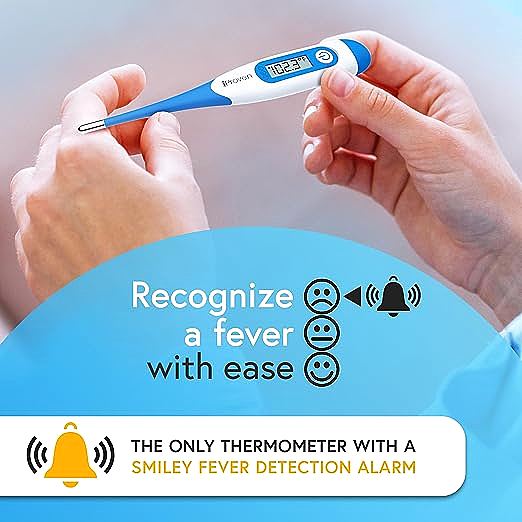
Many modern thermometers, including the iProven, also feature a Smiley Fever Indicator. It’s tempting to dismiss this as a gimmick, but it serves a genuine purpose as a rapid triage tool. Before your brain even fully processes the number, a simple happy or sad face gives you an instant emotional cue. Think of it as the headline, not the full story. It’s a quick, color-coded alert that helps you assess the situation at a glance. Your most reliable guide, however, is always the number on the screen.
The Art of Precision: Your Guide to Consistent, Accurate Readings
This is where science meets practice. A thermometer’s stated accuracy is its lab potential; what you achieve at home depends entirely on technique.
First, embrace a new mindset: focus on trends, not just single readings. Your body temperature isn’t a fixed number; it fluctuates throughout the day and varies between individuals. The oft-cited 98.6°F (37°C) is an average, not a universal constant. The most valuable information comes from knowing your (or your child’s) baseline temperature when healthy and then tracking the deviation from that baseline when sick. A single reading might have a slight variance, but a clear upward trend over several hours is a definitive signal.
Second, method matters. The choice of where you measure has a significant impact on the reading.
* Rectal: Considered the gold standard for infants and young children due to its accuracy.
* Oral: Highly accurate for adults and older children, provided it’s done correctly.
* Axillary (Underarm): The most convenient but generally the least accurate method, as it measures skin rather than core body temperature. It’s useful for screening, but an elevated reading should be confirmed by an oral or rectal measurement.
To be a “professional operator” of your thermometer, follow this checklist:
* Wait: Before an oral reading, wait at least 15 minutes after eating, drinking, or smoking.
* Placement: For oral use, ensure the tip is placed deep under the tongue in the “heat pocket” and the mouth is kept closed.
* Stillness: Remain still during the measurement, as movement can affect the reading.
* Consistency: Use the same method each time you measure to ensure you are comparing like with like.
Beyond the Reading: Maintenance for Long-Term Reliability
Mastering the measurement technique is critical, but the life of your thermometer doesn’t end when the number appears. Proper care ensures it will be just as accurate for the next fever. Following CDC guidelines for home medical devices, you should clean your thermometer after every use. Thanks to its waterproof design, this is as simple as washing the tip with soap and water or wiping it with an alcohol swab.
And what about power? The product description correctly notes that the thermometer includes a battery and uses an auto-shutoff feature to preserve its life, which can last for hundreds of measurements. Storing it in its hard case will protect it from damage and keep it ready for action.

Conclusion: From a Black Box to a Trusted Tool
The humble digital thermometer is a marvel of accessible science. It’s a device where a sophisticated sensor, a smart algorithm, and thoughtful design converge to provide a critical piece of health data. By understanding the quiet science behind its beep, appreciating the nuances of its design, and mastering the art of its use, you transform it from a black box you passively trust into a tool you actively and intelligently wield. The next time you reach for it, you’ll be armed not just with a piece of technology, but with the knowledge and confidence to use it to its fullest potential.