The 60-Hour Power Play: How Wireless Earbuds Engineered an Escape from Battery Anxiety

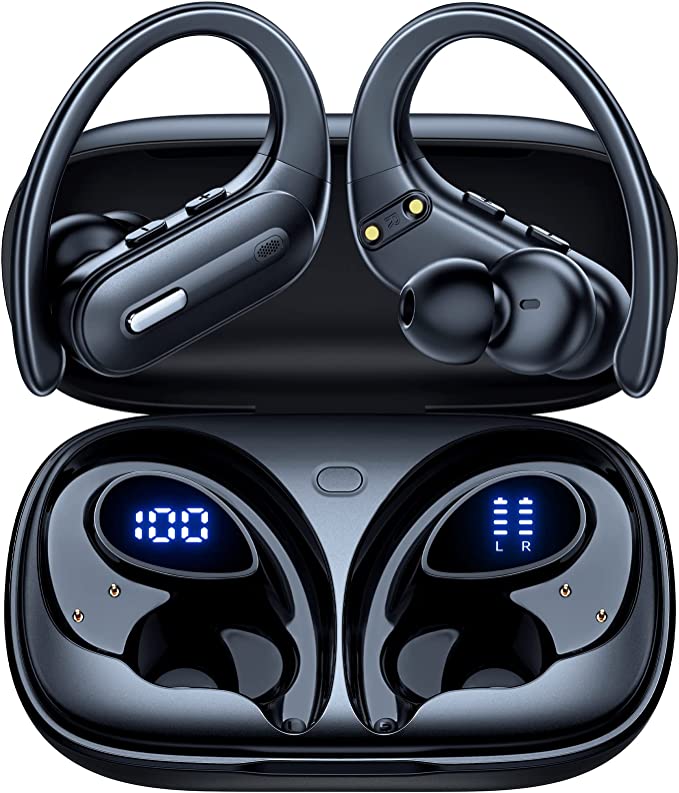
There’s a subtle but profound shift happening in our relationship with personal technology. For years, we’ve been tethered by a psychological leash to the nearest power outlet. The daily ritual of charging our devices was as ingrained as brushing our teeth. But with the latest generation of true wireless (TWS) earbuds, that leash is starting to fray. We’re seeing products like the CAPOXO X19 confidently advertising a staggering 60 hours of total playtime.
This isn’t just an incremental improvement. It’s a leap across a critical psychological threshold. It’s the difference between “a day of use” and “a week of use.” It’s the freedom to pack for a weekend trip and consciously leave another charger behind. This newfound freedom from battery anxiety isn’t magic, nor is it the result of a single breakthrough. It’s the victory of a carefully balanced system, a power trinity working in harmony.
Let’s dissect this engineering marvel. Forget comparing Brand A to Brand B for a moment. Instead, let’s understand the fundamental principles that allow a tiny device you put in your ear to last for days on end.
The Power Trinity: Deconstructing 60-Hour Playtime
Achieving long-haul endurance in a device with almost no internal space is a masterclass in compromise and optimization. The 60-hour figure is not a single battery’s capacity, but the result of a complete power ecosystem. This ecosystem can be broken down into three core components:
- The Marathon Runner (The Earbud): An ultra-efficient device that sips power instead of guzzling it. This is the “active use” part of the equation.
- The Mobile Power Station (The Charging Case): A portable battery bank that refuels the earbuds multiple times over. This is the source of the vast majority of the total playtime.
- The Refueling Station (The Charging Technology): The convenient methods used to replenish the entire system.
Let’s examine how each part of this trinity contributes to the final, impressive number.
Part 1: The Marathon Runner (The Earbud)
An earbud’s single-charge playtime—say, the 8 hours quoted for the X19—is arguably the most impressive feat of engineering. The battery inside a single earbud is minuscule, often a lithium-ion coin cell with a capacity of just 40 to 85 mAh. For perspective, a modern smartphone battery is often over 4,000 mAh. So how does it last so long? The strategy is aggressive “节流” (throttling consumption).
The biggest power consumer in an earbud is the System on a Chip (SoC), which integrates the Bluetooth radio, audio processing, and other functions. The revolution in TWS battery life is directly tied to the advancement of these chips. Modern SoCs from manufacturers like Qualcomm and Bestechnic are built on highly efficient manufacturing processes (like 22nm). This means the billions of transistors on the chip can switch on and off using far less energy than their predecessors.
Furthermore, as we explored in the context of Bluetooth 5.3, new audio codecs like LC3 are designed for extreme efficiency. They can transmit high-quality audio at lower data rates, meaning the Bluetooth radio doesn’t have to work as hard or as often. It’s like switching a V8 engine for a highly advanced turbocharged four-cylinder—you get similar performance with a fraction of the fuel consumption.
Part 2: The Mobile Power Station (The Charging Case)
But no matter how efficient the runner is, they eventually need to rest and refuel. An 8-hour runtime is impressive, but it’s not what gets you to 60 hours. For that, we need to turn our attention to the unsung hero of the TWS world: the charging case.
The case is, quite simply, a pocketable power bank dedicated to the earbuds. While the earbuds have tiny batteries, the case typically houses a much larger one, often between 300 and 800 mAh. Let’s do some simple math with our example: if the total playtime is 60 hours and the earbuds last 8 hours, the case holds an additional 52 hours of charge. This means the case can fully recharge the earbuds from empty roughly 6.5 times ((60-8)/8).
But the case is more than just a battery in a plastic box. It contains a sophisticated Power Management Integrated Circuit (PMIC). Think of the PMIC as a smart energy accountant. It manages:
* Charging the Case: Safely taking power from a USB-C cable or wireless charger.
* Charging the Earbuds: Delivering a precise, stable voltage to the tiny batteries in the earbuds.
* Protection: Shielding the system from overcharging, overheating, and short circuits.
* Power Display: Accurately measuring the remaining charge (often using a technique called coulomb counting) and displaying it on LED indicators.
This “energy accountant” is crucial for the system’s efficiency and longevity. It ensures that energy isn’t wasted during transfers and that the batteries are kept healthy.
Part 3: The Refueling Station (The Charging Tech)
The final piece of the puzzle is how we get power into the system in the first place. Modern TWS systems offer flexibility here.
USB-C: This has become the de facto standard for a reason. It’s reversible, durable, and supports faster charging speeds than older Micro-USB ports. It provides a reliable, efficient way to quickly top up the case.
Qi Wireless Charging: This adds a layer of pure convenience. The technology is based on electromagnetic induction. A coil in the charging pad creates a magnetic field, which induces a current in a corresponding coil inside the earbud case, charging the battery without any physical connection. While incredibly convenient (just drop it on the pad), it’s worth noting that wireless charging is less efficient than wired charging, with some energy lost as heat during the transfer. It’s a trade-off of efficiency for elegance.
Conclusion: It’s the System, Stupid
The next time you see a headline-grabbing playtime figure on a box of earbuds, you’ll know the secret. It’s not one giant battery. It’s the result of a harmonious system: hyper-efficient earbuds that sip power, a high-capacity case that acts as a mobile power station, and flexible charging options that make refueling painless.
To get the most out of this incredible engineering, a little care goes a long way. The lithium-ion batteries in your earbuds and case are happiest when treated well:
* Avoid deep discharges: Try to recharge the case before it hits 0%. “Topping up” is healthier for lithium-ion batteries than deep cycling.
* Mind the temperature: Avoid leaving your earbuds in a hot car or in freezing temperatures, as extremes can permanently damage battery capacity.
* For long-term storage: If you’re not going to use them for a few months, charge the case to about 50% before putting them away.
By understanding the system, you can not only appreciate the technology but also help it last longer, keeping you free from that charging leash for years to come.