Designed in Italy, Made in Vietnam: The Shifting Soul of a Cultural Icon

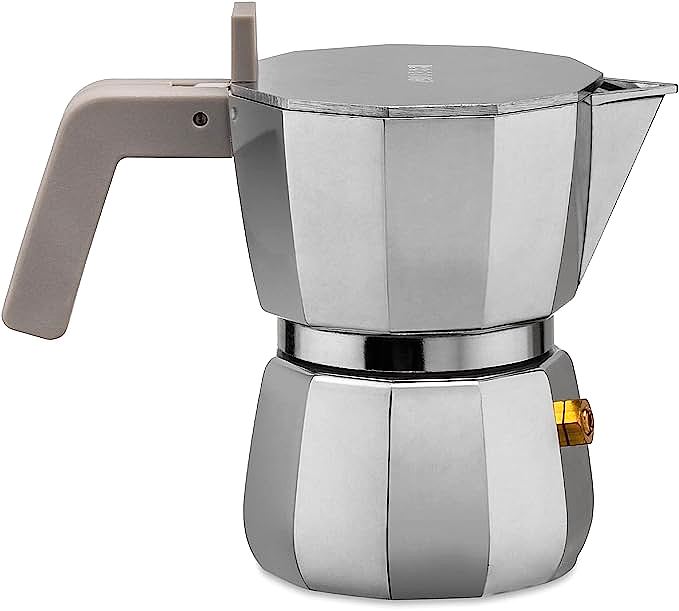
There is a small, often overlooked sticker on the box of the Alessi Moka pot designed by David Chipperfield. It reads, “Made in Vietnam.” For an object so deeply intertwined with the concept of “Made in Italy”—a phrase that evokes not just a place of origin but a whole universe of style, quality, and heritage—these three words can be jarring. You hold in your hands a product from a legendary Italian design house, a reinterpretation of a national symbol, conceived by a celebrated British architect. The discovery of its Vietnamese manufacturing origin triggers a fascinating and complex question: In a globalized world, what is the true soul of a cultural icon?
This is not just a story about a coffee pot. It’s a story about the evolving identity of design itself, and how ideas born in one culture are now manufactured in another, challenging our very definitions of authenticity.

The Birth of a Symbol: Bialetti, Aluminum, and Post-War Italy
To understand the weight of this issue, one must travel back to 1933. Alfonso Bialetti, an engineer working with aluminum, created the Moka Express. It was a revolutionary object. Its brilliant Art Deco-inspired octagonal shape, its use of a modern, lightweight metal, and its affordable price tag perfectly captured the spirit of the age. In the post-war boom, as Italy was rebuilding and redefining its national identity, the Moka pot became ubiquitous. It was a symbol of economic progress and, more importantly, a tool for a domestic ritual that brought the luxury of espresso-like coffee from the café into the home.
For decades, the Bialetti Moka pot was quintessentially Italian. It was designed by an Italian, made from a material championed by the Italian state, manufactured in Italian factories by Italian workers, and used in nearly every Italian household. “Made in Italy” was not a marketing tag; it was a simple statement of fact, a source of national and local pride.
The “Italian Design Factory”: Alessi’s Cultural Ambition
Decades later, another company from the same region, Alessi, approached Italian products with a different philosophy. Founded in 1921, Alessi evolved into what they called one of the “Factories of Italian design.” Their mission was not merely to produce functional objects, but to infuse them with artistic and poetic qualities. They did this by collaborating with the world’s most daring designers and architects, from Philippe Starck to Zaha Hadid.
Alessi’s vision was to elevate everyday objects into conversation pieces, turning a simple kettle or corkscrew into an expression of a specific design language. For Alessi, the value lay not just in the manufacturing, but in the intellectual and creative capital of the design itself. They established that “Italian Design” was a school of thought, an approach to form and function that could be applied to any object.
A Global Dialogue: The British Architect and the Vietnamese Factory
This philosophy logically paved the way for the modern reality embodied by the Chipperfield Moka. The project itself is a global dialogue: an Italian company hires a British architect to reinterpret an Italian icon. The final link in this chain—manufacturing in Vietnam—is a reflection of 21st-century economics and supply chain logistics. But does it dilute the object’s identity?
The debate hinges on what “Made in Italy” truly signifies today. Is it a strict geographical label, or is it a certification of a certain standard of design and quality? Proponents of the latter argue that the core of the product—its design, its intellectual property, its quality control standards—remains firmly rooted in Alessi’s Italian headquarters. The design is a blueprint, a set of precise instructions and quality tolerances that can, in theory, be executed perfectly anywhere in the world, provided the oversight is rigorous. In this view, Alessi is exporting not just a product, but a system of design excellence.
However, this perspective is not without its critics. For many, the physical act of creation, the craft and manufacturing heritage of a specific place, is inseparable from the object’s soul. They argue that moving production abroad, even while maintaining design control, severs a vital link to the tradition and the community that gave the object its original meaning. It raises valid concerns about the erosion of local manufacturing and the potential for a brand’s identity to become a hollow marketing shell.

Conclusion: The Soul of the Object—Forged in Italy, Found in the Ritual
Ultimately, the Alessi Moka pot “Made in Vietnam” sits at the crossroads of this debate. It represents a new, globalized model of cultural production. It suggests that the “Italian-ness” of an object may lie less in the soil where its components were assembled and more in the integrity of the idea that conceived it.
The soul of an object is a notoriously elusive thing. Perhaps it is not exclusively forged in the factory, whether in Italy or Vietnam. Perhaps its truest identity is formed in the quiet moments of its use. When you fill the boiler with water, spoon coffee into the funnel, and place it on your stove, you are participating in a ritual that is undeniably Italian in its origins. The gurgling sound it makes, the aroma that fills your kitchen—these sensory experiences connect you to a tradition that transcends geography.
The sticker on the box tells a story of modern commerce, but the ritual in your kitchen tells a story of culture. And in the end, it is the daily, personal ritual that breathes life and soul into an inanimate object, making it truly your own, wherever it was made.