Seeing the Heat: How Infrared Vision is Revolutionizing Electronics Repair

We’ve all felt that sinking feeling. A press of the power button on a beloved smartphone or a critical laptop yields nothing but a cold, dark screen. Inside that sleek enclosure lies a miniature city of components, a dense labyrinth where a single, microscopic failure can bring the entire metropolis to a standstill. Traditional troubleshooting can feel like a blindfolded search in this city, a tedious process of probing and guesswork. But what if you could take off the blindfold? What if you could see a language that electronics speak when they’re in distress—the silent, invisible language of heat?
This is not science fiction; it is the reality of infrared thermography. And our journey to understanding this transformative technology begins not in a modern lab, but in the year 1800, with an astronomer, a prism, and a simple set of thermometers. Sir William Herschel, curious about the heat of different colors of sunlight, noticed something astonishing: a thermometer placed just beyond the red end of the visible spectrum registered the highest temperature of all. He had stumbled upon a new, invisible form of light. He called it “calorific rays.” We now call it infrared.
Herschel had discovered a new form of light, but it would take another two centuries for engineers to fully harness it to diagnose our most modern creations. To understand how, we must first journey into the heart of a circuit and ask a simple question: when electronics go wrong, why do they get hot?
The Physics of a “Feverish” Circuit
In the intricate dance of electrons flowing through a circuit board, heat is an unavoidable and informative byproduct. A normally functioning board has a predictable thermal signature, a baseline map of expected warm spots. When a fault occurs, this map changes dramatically, and the reason lies in two fundamental principles of physics.
Joule’s Law – The Source of the Glow
The first and most critical principle was described by James Prescott Joule in the 1840s. His first law, a cornerstone of electrical physics, is elegantly simple: P = I^2R. This equation states that the power (P), dissipated as heat, is equal to the square of the current (I) multiplied by the resistance (R). In a short circuit, this law goes into overdrive. An unintended, low-resistance path is created, causing the current (I) to surge dramatically. Even with a tiny resistance, the fact that the current is squared means the heat generated skyrockets, creating an intense, localized hotspot—a thermal scream for help. This isn’t limited to dead shorts; a failing component drawing more current than it should will also run an abnormal “fever,” broadcasting its distress.
The Language of Heat
The second principle is that nearly every object in the universe with a temperature above absolute zero (-273.15°C) is constantly emitting this thermal energy in the form of infrared radiation. This phenomenon, known as blackbody radiation, means that every component on a PCB—from the tiniest capacitor to the main processor—is perpetually “glowing” in the infrared spectrum. The intensity and peak wavelength of this glow are directly tied to its temperature. For objects at or near room temperature, like the electronics we use every day, this glow is most intense in the Long-Wave Infrared (LWIR) spectrum, typically between 7.5 and 13.5 micrometers (µm). This specific “band” is the language of heat for consumer electronics, invisible to our eyes but crystal clear to the right kind of sensor.
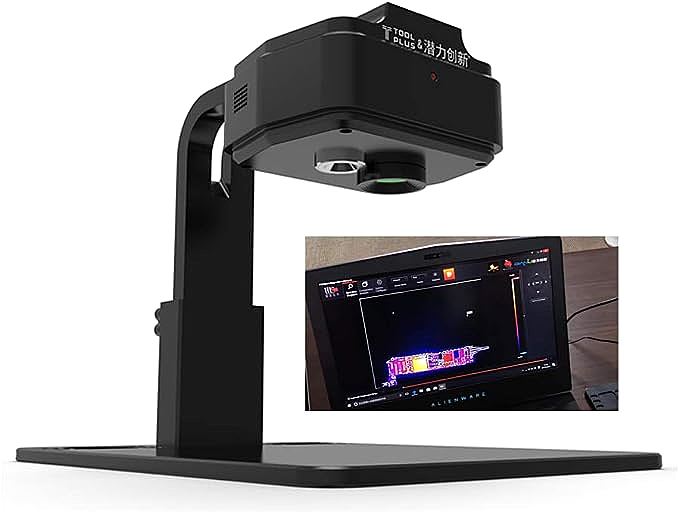
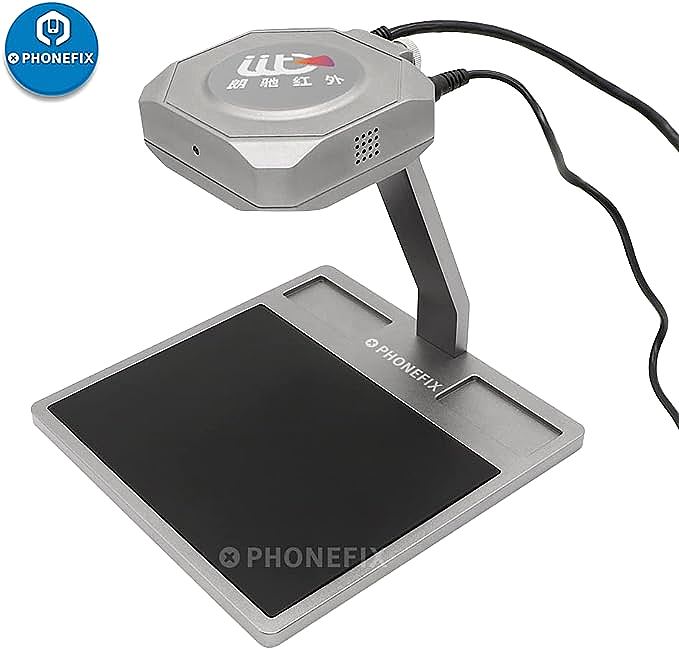
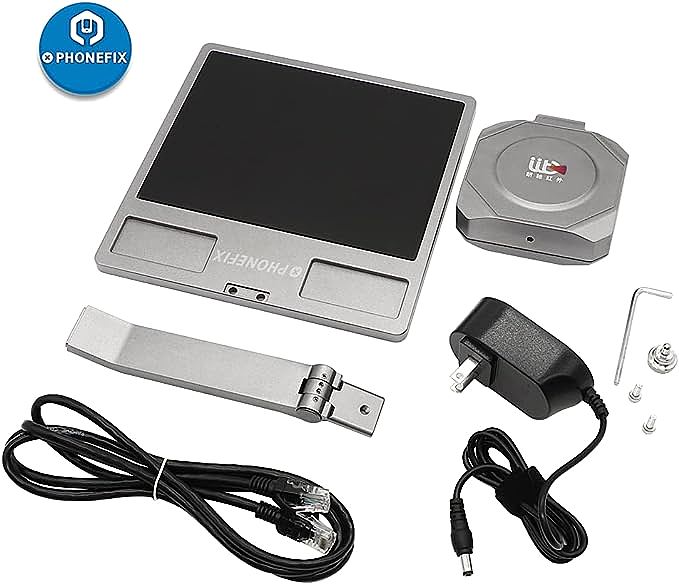
So, we have a physical principle: faults generate heat, and heat radiates as invisible infrared light. But how do we catch this fleeting, invisible message? This is where modern marvels of engineering, exemplified by tools like the Qianli LINC IIT ShortCam, step onto the scene, acting as a translator between the silent language of heat and our own eyes.
Anatomy of a Thermal Detective’s Eye
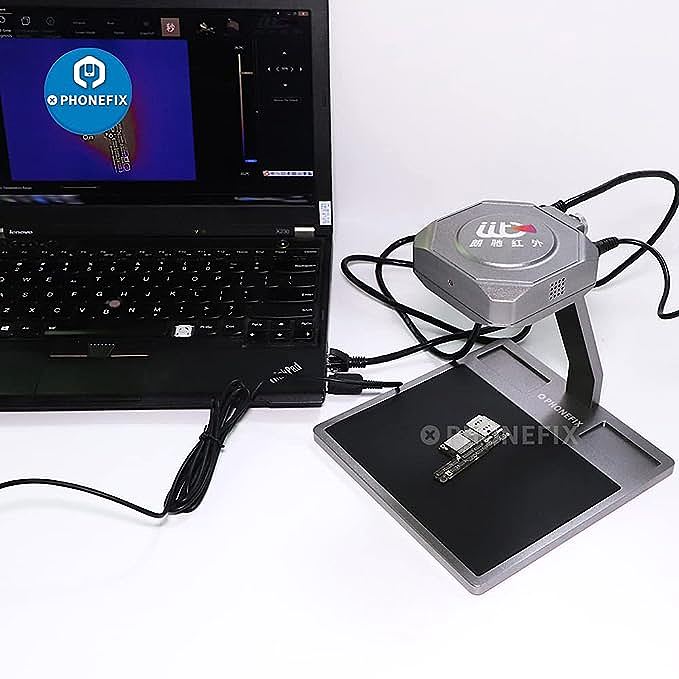
An infrared thermal imager is more than just a camera; it is a sophisticated sensor system designed to capture and interpret this invisible world. While various models exist, they share a common technological core designed to make thermal data actionable.
The Sensor: Capturing Invisible Light
At the heart of a device like the ShortCam is an array of microscopic sensors called a microbolometer. Each tiny sensor in the array (for example, 160×120 pixels in the base model, with higher-end versions offering more) is designed to absorb infrared radiation. As it absorbs the radiation from a point on the PCB, its temperature changes slightly. This temperature change alters its electrical resistance, which is then measured, processed, and converted into a single pixel in a thermal image. This process happens thousands of times per second, guided by powerful software that can enhance faint signals, creating a real-time heat map of the target. It’s a marvel of micro-electro-mechanical systems (MEMS) that allows for relatively low-cost, uncooled thermal cameras.
Dual-Vision Fusion: Where Heat Meets Reality
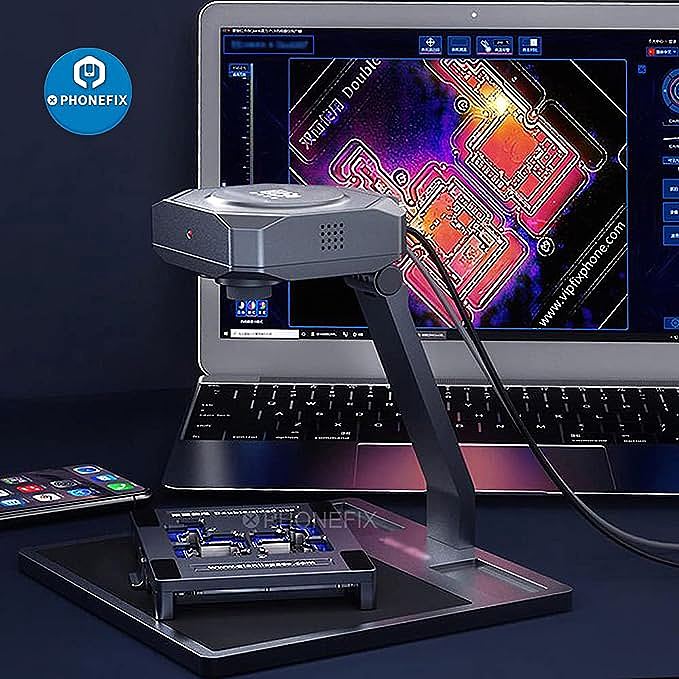
Knowing that something is hot is only half the battle; a technician absolutely must know what physical component is hot. This is why the most effective diagnostic imagers employ a dual-vision approach. Alongside its infrared sensor, a modern thermal camera integrates a standard high-resolution visible light camera (often 1920×1080 or higher). The device’s software then performs the most critical function: it precisely overlays the thermal heat map onto the live visible image. This “dual optical interlace positioning” transforms an abstract-looking heat map into a direct diagnostic pointer. That glowing red hotspot is no longer an ambiguous blob of color; it is clearly superimposed on a specific capacitor, a resistor, or a single pin of an integrated circuit. This fusion of visible and infrared data is the key to rapid, unambiguous fault localization.
The Power and Limitations of Thermal Vision
Having this “heat vision” sounds like a superpower, and in many ways, it is. It allows for incredibly fast, non-destructive testing that can slash diagnostic times from hours to minutes. It can reveal subtle issues like micro-current leakage that are nearly impossible to find with other methods. However, like any powerful tool, it’s crucial to understand not just what it can do, but also what it cannot do. A true master knows the limits of their instruments.
The Power:
* Speed: A scan can reveal a hotspot in seconds after power is applied.
* Non-Destructive: No physical probing is required, eliminating the risk of causing further damage to delicate circuitry.
* Precision: It can pinpoint heat on microscopic surface-mount components in a way the human hand never could.
* Sensitivity: It can detect subtle heat signatures from minor leakages that traditional methods would miss.
The Limitations:
* Not a panacea: It cannot detect purely logical or software-related faults that do not produce a significant thermal signature.
* Surface readings only: It measures the surface temperature of components. An internal fault in a large chip might not immediately present as a surface hotspot due to thermal mass.
* The challenge of emissivity: The accuracy of temperature measurement is affected by a material’s surface properties. Highly reflective, shiny surfaces (like fresh solder joints or metal shields) are poor emitters of thermal energy. Think of it like a mirror: it reflects the heat of its surroundings rather than showing its own true temperature. While this is less critical for simply finding the hottest spot (the fault), it’s something technicians must be aware of.
* A clue, not a conclusion: A hotspot identifies the location of a problem, but not necessarily the cause. The hot component might be the victim, not the culprit, heated by a fault in a connected component. The thermal imager is the detective that finds the clue; a multimeter and schematic are the forensic tools needed to confirm the case.
Conclusion: A New Paradigm in Troubleshooting
From Sir William Herschel’s curious experiment with a prism to a technician in 2025 diagnosing a smartphone, our ability to perceive and interpret infrared radiation has unlocked a hidden world. Tools that harness this power are more than just gadgets; they represent a fundamental shift in how we approach electronic troubleshooting. By translating the silent language of heat into visual, actionable intelligence, they empower technicians to work faster, more accurately, and more effectively.
In an era where electronics are becoming ever more complex and miniaturized, this ability is vital. It supports the growing Right-to-Repair movement, making it feasible to perform component-level repairs rather than discarding entire circuit boards. This not only saves money but also reduces electronic waste. Thermal imaging doesn’t solve every puzzle, but it provides an incredibly powerful lens for a vast range of common hardware failures, reminding us that sometimes, the most revealing clues are hidden in plain sight, just waiting for the right kind of vision to bring them to light.
Disclaimer: The mention of any specific product is for illustrative and educational purposes only and does not constitute an official endorsement or review.