
The Home Comfort Equation: A Guide to Mini-Split Smart Features and Installation Realities
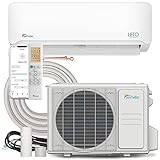
The modern home is sold on a promise: a seamless, intuitive environment that anticipates our needs. We envision a space where lights adjust to the time of day, and the climate shifts to perfect comfort moments before we walk through the door. Ductless mini-split systems, with their efficiency and quiet power, are central characters in this narrative of smart living. Using a popular model like the Senville SENL-18CD-16 LETO as a real-world case study, we can explore this promise.
But beyond the polished marketing and the allure of voice-activated bliss, what is the day-to-day reality of living with such a device? Achieving perfect home comfort is less about buying a box of features and more about understanding a complex equation. This guide is designed to help you decode the variables—from the quirks of smart home integration to the non-negotiable realities of installation—so you can solve your own personal comfort equation.

The Voice in the Room: When Alexa and the Remote Don’t Talk
It all starts with that vision of effortless control. You imagine simply saying, “Alexa, set the office to 72 degrees,” while your hands are full. The integration of voice assistants is a primary selling point for any smart appliance, and when it works, it feels like magic. Setting routines, adjusting temperatures from another room, or turning on the AC on your way home are powerful conveniences.
However, the reality, as echoed in the experiences of numerous users, can introduce an unexpected layer of complexity. A common frustration emerges: the smart assistant and the physical remote can fall out of sync. You might use the remote to turn the unit off, but the Alexa app still shows it as on. Or Alexa might accept a command, but the change isn’t reflected if you later pick up the remote. As one user aptly put it, “They don’t play well together.” This presents a particular challenge in households where some members prefer a simple remote while others use the app, creating a confusing and disjointed experience.
This isn’t necessarily a flaw of one brand, but rather a common hurdle within the broader smart home ecosystem. It often stems from “cloud-to-cloud” communication, where commands travel from your voice, to Amazon’s servers, to the manufacturer’s servers, and finally to your device. Any hiccup along that digital chain can lead to a desynchronized state. For your comfort equation, you must weigh the convenience of occasional voice commands against the potential frustration of a system that can, at times, have two competing brains.

More Than a Cooler: The Reality of 4-in-1 Versatility
The core appeal of a modern mini-split is its ability to be a year-round climate workhorse. The promise is a single, elegant solution for cooling, heating, dehumidifying, and simple air circulation. This consolidation is a massive step up from juggling window units and space heaters.
The reality is that this versatility is potent, but not without its limits. The built-in heat pump, capable of operating in temperatures as low as 5°F (-15°C), is a remarkable piece of technology. For many regions, it’s a highly efficient heating solution for much of the fall and winter. However, it’s crucial to check this against your local climate data. In areas with prolonged, deep freezes, this will serve as an excellent supplementary heat source, but you will still need a primary system. It’s a different class of machine from premium “hyper-heat” models (like Senville’s own Aura Series), which are designed to function effectively at much lower temperatures.
Similarly, the “Dry Mode” is a useful feature for reducing humidity on muggy days, but it cannot replace the power and capacity of a dedicated dehumidifier in a damp basement. For your equation, honestly assess your environment. Will this unit be your sole source of heating and cooling, or a powerful assistant to an existing system?

The Devil in the Details: “Follow Me” and Air Swing Subtleties
Beyond the primary functions are features designed for personalized comfort, such as “Follow Me” and “Swing.” The promise is a system that intelligently directs conditioned air exactly where you are.
The reality is these features often have specific operational requirements. The “Follow Me” function, for example, is brilliant in concept: a temperature sensor in the remote control tells the unit to heat or cool based on your location, not the wall where the unit is mounted. However, its effectiveness hinges on the remote maintaining a consistent, unobstructed line of sight with the indoor unit via an infrared (IR) signal. If you take the remote to an adjacent room or if it’s tucked behind a sofa, the feature disengages, and the system reverts to its own sensor.
Similarly, user feedback often points out nuances in the “Swing” feature. While the unit provides excellent vertical oscillation, spreading air up and down, the horizontal louvers must be adjusted manually. It does not automatically sweep side-to-side. For your equation, consider your room’s layout. Is it a simple, open space where these features would excel, or a complex area where their limitations might become apparent?

The Installation Crossroads: DIY Dreams vs. Warranty Reality
Getting the performance you expect isn’t just about what’s inside the box. It’s about how that box gets connected on your wall. This brings us to what is arguably the single most important—and most misunderstood—part of your mini-split journey: the installation.
The inclusion of a “16ft. installation kit” might whisper the tempting idea of a weekend DIY project. The appeal is powerful: saving hundreds, or even thousands, on installation fees. Many handy homeowners are perfectly capable of mounting the hardware. However, the dream often collides with a harsh reality detailed in the fine print.
Senville, like nearly all mini-split manufacturers, is unequivocal: the warranty is void unless the final, crucial steps are performed by a licensed HVAC technician. This specifically refers to pressure testing the lines for leaks and, most critically, using a vacuum pump to remove all moisture and air from the refrigerant lines before releasing the refrigerant. This isn’t just a bureaucratic hurdle; it is fundamental to the unit’s performance and longevity. Trapped moisture can freeze and destroy the compressor, the heart of the system. Even minor amounts will drastically reduce the unit’s efficiency, meaning you’ll pay more in electricity bills for weaker performance, completely negating the high SEER2 rating.
Furthermore, handling high-pressure refrigerant and 220-volt electricity carries significant safety risks. This creates a dilemma. Finding a professional willing to finish and certify a job they didn’t start can be challenging. Therefore, this non-negotiable professional cost must be factored into your total budget from day one. It is not an optional add-on; it is the final, critical variable that ensures the rest of your comfort equation actually works.
Conclusion: Solving Your Own Comfort Equation
There is no single “best” mini-split, only the one that is best for you. The ideal choice comes not from a feature list, but from an informed understanding of how those features will interact with your life, your home, and your budget.
A voice-controlled feature you constantly fight with is not a convenience. A heating function that can’t handle your coldest winter nights is a liability. And a DIY installation that voids your warranty and cripples performance is a catastrophic loss. As you weigh your options, re-evaluate each feature through the lens of your personal needs. The smartest choice is always the most informed one.