
Physics of Vigilance: Engineering Surface Wave Detection and Aquatic Safety Systems
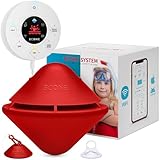
The placid surface of a backyard swimming pool offers a deceptive tranquility. To the human eye, it is a static volume of water, a symbol of leisure and suburban architecture. However, from the perspective of physics and safety engineering, a body of water is a highly dynamic, inherently hazardous environment. It is a medium constantly subjected to atmospheric pressure variations, thermal expansion, wind shear, and mechanical circulation. Amidst this chaotic background noise, engineers must design systems capable of identifying a singular, catastrophic event: the unauthorized entry of a human or animal.
For decades, the primary defense against aquatic accidents has been physical isolation—fences, gates, and locked doors. While these structural barriers are foundational, they are passive. They rely entirely on human compliance to remain closed and secured. The evolution of active technological vigilance—the aquatic safety alarm—represents a shift from passive barricades to active environmental monitoring. Understanding the efficacy, limitations, and underlying science of these devices requires a multidisciplinary exploration spanning fluid dynamics, algorithmic signal processing, radio frequency engineering, and human behavioral psychology.
By examining modern architectural solutions, such as the BCONE System Pool Alarm by Lifebuoy, we can dissect the complex reality of converting the chaotic kinetics of water into actionable, life-saving digital data. This is not merely a discussion of a consumer appliance; it is an exploration of how we engineer synthetic senses to protect our most vulnerable populations.
Fluid Dynamics: The Anatomy of a Splash
To understand how a surface alarm functions, one must first comprehend the mechanical nature of water displacement. Water is an incompressible fluid. When an object—whether a falling leaf, a gust of wind, or a thirty-pound toddler—strikes its surface, the water cannot simply compress to absorb the volume. Instead, the energy of the impact is transferred outward as kinetic energy, creating mechanical waves.
Capillary Waves versus Gravity Waves
Not all waves are created equal. The physics of fluid dynamics categorizes surface waves based on the primary restoring force that attempts to flatten the water back to equilibrium.
- Capillary Waves: These are tiny ripples, often generated by a light breeze or a small insect landing on the surface. For capillary waves, the primary restoring force is surface tension. They have very short wavelengths (typically less than 1.7 centimeters) and dissipate rapidly.
- Gravity Waves: When a larger object enters the water, it displaces a significant volume. The primary restoring force pulling the water back down is gravity. These waves have much longer wavelengths and carry significantly more energy.
When a human falls into a pool, the impact generates a complex, chaotic spectrum of both capillary and gravity waves. The initial entry creates a massive downward displacement, followed by a violent upward rebound (the splash), which radiates high-amplitude gravity waves outward in concentric circles.

The Challenge of the Signal-to-Noise Ratio
The fundamental engineering problem in aquatic detection is not sensing a wave; it is identifying the correct wave. A swimming pool is an environment saturated with mechanical noise.
Consider a typical suburban pool. The filtration pump pulls water through a skimmer and forcefully ejects it through return jets, creating continuous underwater currents and surface ripples. A sudden gust of wind passing over the surface creates a phenomenon known as wind shear, transferring kinetic energy to the water and generating chaotic chop. An automated robotic vacuum crawling along the pool floor creates subsurface pressure variations that echo to the surface.
In engineering terminology, these constant environmental factors constitute the “noise floor.” When a child falls in, the resulting wave is the “signal.” The device must achieve a high Signal-to-Noise Ratio (SNR). If the sensors are too sensitive, the noise floor triggers the alarm constantly. If the sensors are too dull, the signal is lost in the background, rendering the safety device useless.
The Algorithmic Brain: From Raw Sensor to Digital Logic
Early iterations of pool alarms were purely mechanical. They often relied on a simple float switch tethered to a fixed point. If a wave lifted the float high enough, it completed an electrical circuit, sounding a buzzer. These rudimentary systems were notoriously prone to false positives. A strong wind would tip the float, waking the neighborhood at 3:00 AM.
Modern architectures have abandoned simple mechanical switches in favor of sophisticated digital signal processing (DSP). Devices like the Lifebuoy BCONE utilize onboard computational power—specifically, microprocessors based on the ARM architecture.
The Role of the Embedded Processor
Why place a computer chip inside a plastic buoy floating in chlorinated water? Because raw physical data is inherently ambiguous.
Inside the floating unit, highly sensitive accelerometers and gyroscopes constantly measure the buoy’s movement across three spatial axes (X, Y, and Z) and its rotational pitch, roll, and yaw. These sensors sample the movement of the water dozens or hundreds of times per second, generating a massive stream of telemetry data.
The onboard ARM processor is tasked with running complex algorithms to analyze this telemetry in real-time. Instead of simply measuring the height of a wave, the algorithm analyzes the frequency, amplitude, and duration of the movement.
By utilizing mathematical techniques such as the Fast Fourier Transform (FFT), the processor can break down the complex, chaotic motion of the buoy into its constituent frequencies. The continuous, rhythmic rippling of a pool pump presents a very specific, repeating frequency signature. The erratic, high-amplitude, multi-directional turbulence of a heavy object crashing into the water presents an entirely different signature. The algorithm acts as a digital sieve, allowing the rhythmic noise to pass through while trapping the sudden, anomalous signal of an emergency.
Tuning the Algorithm: The Necessity of Variable Sensitivity
Because no two fluid environments are identical, a static algorithm is doomed to fail. A massive, 40-foot rectangular pool with a powerful variable-speed pump and sheer descent waterfalls has a drastically different baseline noise floor than a small, circular above-ground pool with a low-flow filter.
This is why modern systems require user-adjustable sensitivity matrices. By interfacing with a mobile application, the user is essentially altering the parameters of the onboard algorithm. Lowering the sensitivity instructs the processor to increase the amplitude threshold required to trigger an alert, effectively telling the device to ignore larger background waves. Raising the sensitivity tightens the mathematical net. The ability to tune these parameters is what allows a mass-produced device to function in highly bespoke architectural environments.

RF Propagation and the Architecture of Communication
Once the embedded processor confirms a critical wave event, it must instantly communicate this conclusion to the humans responsible for the environment. A siren on the floating buoy alone is insufficient; if the homeowners are indoors with windows closed and the television on, they may never hear it. Therefore, a robust telemetric link must be established between the pool surface and the interior of the home.
The Hostility of the Outdoor Environment
Establishing a reliable Radio Frequency (RF) link in a residential backyard is an exercise in overcoming physics. Water is a highly effective attenuator of radio waves. Because the floating unit sits directly on the surface, a significant portion of its broadcast energy is absorbed or scattered by the pool itself.
Furthermore, the signal must penetrate exterior walls. Depending on the architecture, these walls may contain dense brick, concrete block, steel rebar, or metal-backed insulation—all of which degrade, reflect, or entirely block RF transmission. This phenomenon is known as signal attenuation and multipath fading.
Bridging the Gap: The Hub-and-Spoke Model
To ensure reliability, systems like the BCONE employ a hub-and-spoke communication topology.
1. The Spoke (Pool Unit): The floating sensor uses a low-power, high-penetration RF protocol to broadcast its emergency status.
2. The Hub (Home Unit): A receiver placed indoors (ideally within a 100-foot line-of-sight radius, free of excessive masonry obstruction) catches this signal.
Upon receiving the signal, the Home Unit performs two simultaneous actions. First, it activates an internal siren, acting as a high-decibel acoustic relay inside the dwelling. Second, it utilizes the home’s local Wi-Fi network (typically 2.4GHz for better wall penetration) to reach the global internet, pinging a remote server.
This cloud integration allows the server to instantly push notifications to the user’s smartphone, regardless of their geographical location. It also enables integration with broader smart-home ecosystems like Amazon Alexa. The transition from local RF to local Wi-Fi to global cellular data networks ensures that the critical alert has multiple pathways to reach human attention, mitigating the risk of localized acoustic failure.
Failure Modes and Engineering Realities
A critical analysis of any safety technology must acknowledge its inherent vulnerabilities. Devices that exist at the intersection of water, electricity, and wireless communication are subject to a multitude of failure modes.
Battery Chemistry and Power Degradation
A floating sensor cannot be tethered to a permanent power grid; it relies entirely on internal chemical energy storage. The BCONE pool unit utilizes standard AA alkaline batteries. While alkaline chemistry provides a stable voltage curve for a significant duration (up to 18 months under optimal conditions), it is highly susceptible to thermal extremes.
In a sun-drenched pool during the peak of summer, the internal temperature of a dark plastic buoy can soar, accelerating the chemical self-discharge rate of the batteries. Conversely, in near-freezing winter conditions, the internal resistance of the battery increases, dropping the available voltage. If the voltage drops below the threshold required by the ARM processor, the device will silently fail.
Similarly, the Home Unit—while boasting a rechargeable lithium-ion battery—faces the reality of parasitic drain. Connecting to Wi-Fi, maintaining an open listening channel for the pool unit, and illuminating LED status indicators requires continuous power. If the Home Unit is not permanently plugged into a mains outlet, its battery will inevitably deplete. A safety device is only as reliable as its power source; an unpowered hub severs the critical communication link.
The Problem of “Dead Zones” and Acoustic Shadows
Even if the algorithms are perfect and the batteries are full, physical placement can induce failure. If a pool is exceptionally large (e.g., exceeding 20 by 40 feet) or possesses an irregular geometric shape (like an L-shape or figure-eight), a single floating sensor may not suffice.
Waves lose energy as they travel across distances—a principle governed by the inverse-square law. A small splash at the far end of a massive pool may dissipate into the noise floor before the ripples reach a centrally located buoy. Furthermore, structural features like large grottos, swim-up bars, or dividing peninsulas can create “acoustic shadows” on the water’s surface, reflecting waves away from the sensor. In complex architectural environments, safety requires an array of interconnected sensors, forming a mesh network across the surface to eliminate blind spots.
The Psychology of Vigilance: Alarm Fatigue and Human Behavior
The most sophisticated engineering in the world is rendered useless by human psychology. In the realm of safety monitoring, engineers must wage a constant battle against “Alarm Fatigue” or “The Cry Wolf Effect.”
Sensory Adaptation and the Nuisance Factor
Sensory adaptation is an evolutionary mechanism whereby the human brain learns to ignore continuous or repetitive, non-threatening stimuli. If an individual lives near train tracks, they eventually stop noticing the sound of the passing trains.
If a pool alarm is improperly tuned and frequently triggers due to wind gusts, heavy rain, or the pool pump turning on, the homeowner’s brain begins to classify the high-decibel siren as a “nuisance” rather than a “threat.” The psychological response shifts from panic to annoyance.
When this occurs, the physical response inevitably follows: the user disables the alarm. They remove the batteries, unplug the receiver, or permanently mute the app. A disabled safety device is infinitely more dangerous than having no device at all, because it leaves the user with a false, lingering sense of security.
Engineering Behavioral Compliance
To combat alarm fatigue, modern systems must incorporate features designed specifically to accommodate human convenience.
The implementation of a “Swim Mode”—which temporarily disables the alarm while the pool is in active use—is not merely a convenience feature; it is a vital psychological tool. If a user must endure a screaming siren every time they enter their own pool, they will permanently destroy the device.
However, relying on human memory to re-engage the alarm after swimming is a catastrophic risk factor. Humans are forgetful, easily distracted by wet towels, ringing phones, and hungry children. Therefore, the “auto-reactivation” feature—where the system’s processor monitors the water for a period of absolute stillness before silently re-arming itself—is arguably the most critical algorithmic function of the entire device. It bridges the gap between necessary human convenience and absolute environmental security.
Similarly, the ability to program “Do Not Disturb” (DND) schedules via the mobile app allows the user to silence the alarm during known periods of mechanical noise, such as when a waterfall feature or automated vacuum runs at 2:00 AM. By giving the user granular control over the notification ecosystem, engineers increase the likelihood that the device will remain active and trusted.

Comparative Technologies: The Ecology of Aquatic Monitoring
Surface displacement sensors are not the only technological solution to aquatic safety. The industry is rapidly evolving, yielding a diverse ecology of monitoring systems, each with unique advantages and inherent engineering compromises.
Subsurface Sonar and Pressure Sensors
Rather than floating on the surface, some systems are mounted underwater, attached to the pool wall. These devices typically utilize sensitive pressure transducers or active sonar arrays.
When an object falls into the pool, it creates a sudden, massive volumetric displacement, resulting in a spike in subsurface hydrostatic pressure. Wall-mounted sensors excel at detecting these sudden pressure differentials.
- The Advantage: Because they operate beneath the surface, they are almost entirely immune to wind shear, surface chop, and lightweight floating debris. Their false-alarm rate related to weather is exceptionally low.
- The Compromise: They require permanent or semi-permanent installation, often involving drilling into the pool coping or siding. Furthermore, they can be blinded by the massive turbulence generated by underwater return jets if positioned incorrectly.
Computer Vision and Artificial Intelligence
The frontier of aquatic safety lies in optical recognition. These systems utilize high-definition cameras mounted high above the pool area, feeding live video streams into local or cloud-based neural networks.
These AI models are trained on millions of images to recognize the specific biometric geometry of a human body. They do not look for waves; they look for people.
- The Advantage: Computer vision represents a paradigm shift. An AI can differentiate between a golden retriever and a heavy branch falling into the water. More importantly, advanced optical systems can detect a submerged, motionless body—a scenario where surface wave detectors and pressure sensors are entirely useless, as the water has already settled.
- The Compromise: Optical systems are the most expensive, require continuous mains power, and demand massive computational resources. They are also subject to optical occlusion; a camera cannot see through dense fog, heavy rain, or severe surface glare caused by direct sunlight.
Regulatory Frameworks: The Importance of ASTM F2208
In the consumer safety market, marketing claims are cheap. How can a parent verify that a piece of plastic will actually detect a falling child? This is the role of standardized regulatory frameworks, specifically ASTM International.
The ASTM F2208 standard (Standard Specification for Pool Alarms) is a rigorously defined set of physical testing protocols. To achieve this certification, a device must undergo standardized laboratory trials.
These tests do not involve throwing real children into pools. Instead, they use precisely calibrated weights and volumetric objects designed to mimic the exact displacement dynamics of a small child. The standard dictates the maximum acceptable response time, the minimum required decibel level of the siren, and the system’s ability to resist false alarms under simulated environmental stress (such as simulated wind machines).
When a product, such as the BCONE, bears the ASTM F2208 certification, it transcends the realm of a consumer gadget and enters the domain of verified life-safety equipment. It provides empirical proof that the underlying fluid dynamics analysis and algorithmic processing function successfully under controlled, critical conditions.
Conclusion: The Swiss Cheese Model of Accident Prevention
The pursuit of aquatic safety cannot be solved by a single silver bullet. In risk management theory, there is a concept known as the “Swiss Cheese Model” of accident causation. Every layer of defense is likened to a slice of Swiss cheese; each has inherent holes and vulnerabilities.
A locked gate is a slice of cheese, but a child might figure out the latch (a hole). Adult supervision is a slice of cheese, but a parent might look at their phone for thirty seconds (a hole).
Technological vigilance—whether it is a surface wave detector analyzing gravity ripples, a subsurface pressure transducer, or an overhead AI camera—represents another thick slice of cheese. It is designed to block the trajectory of an accident when the preceding layers have failed.
Understanding the profound science behind these devices—the physics of fluid displacement, the logic of digital signal processing, the limitations of radio frequency, and the psychology of alarm fatigue—empowers homeowners. It transforms them from passive consumers of technology into active architects of their own environment. A pool alarm is an astonishing feat of modern engineering, capable of isolating the catastrophic signal of a falling body from the chaotic noise of water. But it is only effective when properly calibrated, continuously powered, and integrated into a holistic culture of uncompromising safety and supervision.