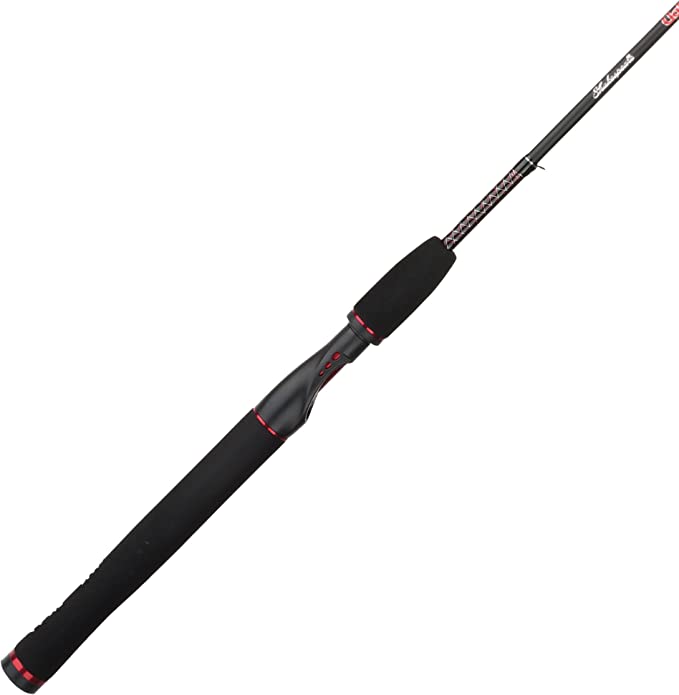
Field Operations: Mastering the Ugly Stik GX2 in the Wild

Owning an Ugly Stik GX2 is a rite of passage for American anglers. It is likely the rod you learned on, and ironically, it is often the rod you return to after realizing that your $300 graphite wand is too delicate for the chaos of kayak fishing or rocky bank scrambling.
However, treating the GX2 exactly like a high-performance carbon rod is a recipe for frustration. Its composite construction, heavy tip, and parabolic action require a specific set of handling protocols. This guide shifts from the laboratory to the lake, detailing how to optimize this “beater” rod for peak performance and how to solve the common issues—like that flying top section—that plague new owners.
The Operator’s Environment: Where the GX2 Thrives
To get the most out of the GX2, you must deploy it in theaters of operation where its “weaknesses” become strengths. This rod is not designed for vertical jigging in 40 feet of water where detecting a millimeter of bite is crucial. It is designed for contact and chaos.
The Kayak and Canoe Chaos
Small watercraft are hostile environments for fishing gear. Rods get stepped on, banged against gunwales, snagged in overhanging trees, and occasionally dunked underwater. In this arena, the GX2 is unrivaled. Its fiberglass sheath protects it from the inevitable impacts that would shatter a graphite blank.
* The “High-Stick” Advantage: When landing a fish in a kayak, you are sitting low to the water. This often forces you to lift the rod high behind your head to bring the fish to the net—a maneuver known as “high-sticking.” This angle places immense stress on the rod tip. A graphite rod will snap under this tension. The GX2’s Moderate-Fast action and solid glass tip absorb this acute angle, bending into a deep “U” shape that protects the rod from your awkward landing mechanics.
The “Bank Beater” Scenario
Bank fishing often involves hiking through brush, casting under tree limbs, and placing your rod on the ground. The GX2’s Ugly Tuff stainless steel guides are critical here. Unlike ceramic guides that can crack when the rod falls onto a rock, the steel guides withstand the abrasion of the bank environment.
Furthermore, the rod’s versatility allows you to switch techniques without switching gear. You can throw a heavy catfish sinker, reel in a spinnerbait, or bobber fish for bluegill, all with the same 6’6″ Medium stick. It is the ultimate “one rod” for the angler who wants to carry a single setup while hiking the shoreline.
Optimization Protocols: Fixing the “Tip Heavy” Feel
One of the most common complaints—and a valid one—is that the GX2 feels heavy. Specifically, it feels “tip heavy.” The solid fiberglass Clear Tip places weight at the furthest point from your hand, creating a lever arm that drags your wrist down.
The Counter-Balance Strategy
Counter-intuitively, the solution to a heavy rod is more weight. Anglers often try to pair the GX2 with a tiny, ultralight reel to save weight. This is a mistake. A light reel shifts the Center of Gravity (CG) further up the rod blank, increasing the torque on your wrist.
The Fix: Balance the GX2 with a slightly heavier, metal-bodied reel (size 3000 or 4000). The extra weight at the handle acts as a counterweight, shifting the balance point back toward your hand. While the total setup is heavier, the felt weight is reduced because you aren’t fighting the leverage of the tip. This makes casting for hours significantly less fatiguing.
Addressing the “Flying Tip”: Ferrule Maintenance
A recurring issue in user reviews, such as the one from Ellen Rubin, is the top section of the rod flying off during a cast. This is a common issue with 2-piece rods that use a “spigot” or standard slip ferrule, especially when materials with different thermal expansion rates (like the composite GX2) are involved.
The Mechanics of the Friction Fit
The joint between the two rod pieces relies on friction. Over time, or due to manufacturing variances, this fit can loosen. Additionally, temperature changes can cause the female and male ends to expand or contract differently.
The Protocol:
1. The Twist-Lock Method: Never just push the two pieces together straight. Insert the top piece at a 45-degree offset, and then twist it into alignment while applying downward pressure. This seats the ferrule spiral-fashion, creating a tighter lock than a linear push.
2. Candle Wax / Ferrule Wax: If the fit is chronically loose, apply a thin layer of ordinary candle wax or specialized ferrule wax to the male end of the connection. The wax adds microscopic thickness and stickiness (tack), preventing the slick surfaces from sliding apart during the centrifugal force of a cast.
3. Check Every Hour: Make it a habit. Every hour of casting, give the ferrule a quick check-twist. The vibration of casting and retrieving naturally loosens friction joints over time.
Application Specifics: Playing to the Rod’s Action
The GX2 is a Moderate-Fast action rod. This means it bends deeper into the blank than a specialized “Fast” or “Extra-Fast” bass rod. You must adjust your fishing style to match this curve.
The Treble Hook Master
This parabolic bend is actually superior for fishing with lures that use treble hooks (crankbaits, topwater plugs, spinners).
* The Delay Factor: When a fish strikes a moving bait, a stiff graphite rod reacts instantly. If you pull back too fast, you might rip the hooks out of the fish’s mouth before it has fully clamped down.
* The Sponge Effect: The GX2’s softer fiberglass tip acts like a sponge. It absorbs the initial strike, allowing the fish to inhale the lure deeper before the backbone of the rod loads up. This delay results in higher hook-up ratios for reaction baits.
The “Load and Sweep” Hookset
Where the GX2 struggles is with single-hook finesse techniques (like plastic worms) that require a bone-jarring hookset to penetrate the jaw. Because the rod is stretchy, a quick “snap” hookset often gets absorbed by the rod’s flex rather than driving the hook.
The Adaptation: When fishing plastics with a GX2, do not use a “snap” hookset. Instead, use a “reel-set” or “sweep-set.” When you feel the bite (or see the line move), reel down rapidly to remove slack and sweep the rod firmly to the side. This loads the powerful lower section of the rod (the backbone) to drive the hook, bypassing the soft tip.
The Legacy of the “Beater”
Ultimately, the Ugly Stik GX2 is not designed to be a hangar queen. It is designed to be used, abused, and put away wet. By understanding its physical limitations—its weight and its soft tip—and maintaining the critical ferrule connection, you transform it from a “cheap rod” into a highly effective tactical tool. It is the rod you lend to a clumsy friend without fear, the rod you strap to a backpack for a hike, and the rod that, ten years from now, will likely still be catching fish when your expensive graphite rods have long since shattered.