
Beyond the Spec Sheet: Deconstructing the Tech in a Modern Rugged Phone

In an industry obsessed with slimming bezels and chasing teraflops, a different class of smartphone quietly thrives. These devices are not designed for the boardroom or the coffee shop; they are built for the boiler room, the construction site, and the storm-battered trail. They are less about communication and more about capability. The Ulefone Armor 9 is a prime example of this philosophy—a device that serves as an excellent case study for the convergence of the modern smartphone with specialized industrial tools.
But to simply label it a “rugged phone” is to miss the point. Its true value lies not in a list of features, but in the complex engineering and scientific principles that make those features possible. Our goal is not to review this phone, but to deconstruct it. We will look under the hood of its three most distinctive traits—its ability to see heat, its extreme physical resilience, and its capacity to peek into hidden spaces—to understand the science, the engineering, and the inherent trade-offs that come with building a tool, not just a telephone.
Visualizing the Invisible: The Science of Integrated Thermal Imaging
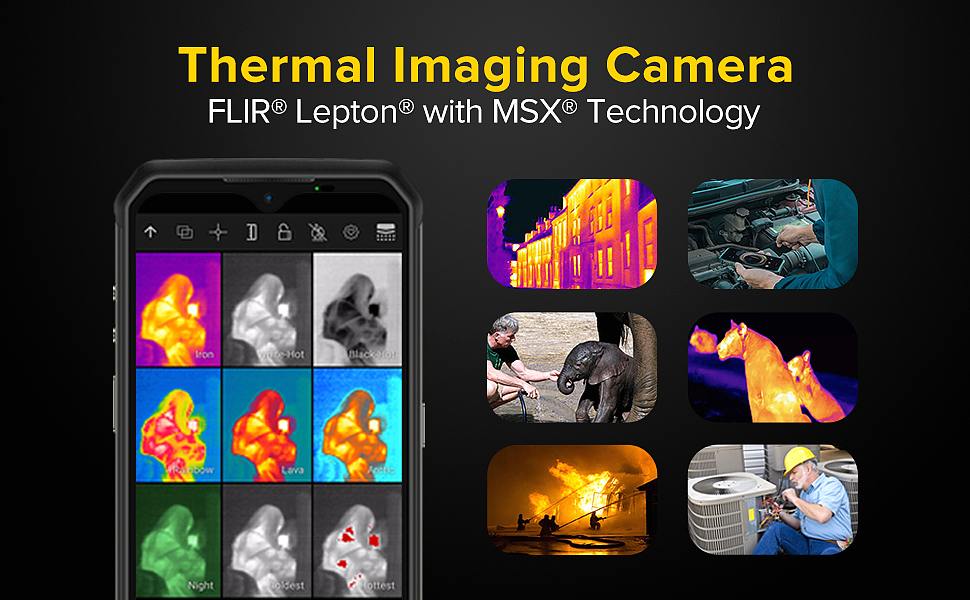
While seeing the unseen is a remarkable feat, it’s useless if the device itself can’t survive the environments where this vision is most needed. This brings us to the engineering of its physical resilience. This phone’s capability to perceive this world of heat is thanks to a miniaturized piece of technology from a leader in the field: FLIR’s Lepton module. At the heart of this module is a microbolometer, an array of microscopic sensors that, when struck by infrared radiation, heat up. This change in temperature alters their electrical resistance, which is then measured and converted into a pixel on a thermal map, or thermogram.
But a simple map of hot and cold spots can be disorienting. A glowing red patch on a wall is just a patch until you can discern its context. This is where the real genius of the system lies: FLIR’s Multi-Spectral Dynamic Imaging, or MSX technology. Instead of just showing the thermal image, the phone simultaneously uses its standard visual camera to identify significant edges and outlines in the scene—the frame of a door, the wires on a circuit board, the text on a label. It then etches these high-contrast visual details onto the thermal image in real-time. The result is a hybrid image that has the temperature data of a thermogram but the clarity and context of a photograph. It’s like being given a heat map with all the streets and building outlines clearly drawn on it, transforming a confusing blob of color into an actionable piece of information.
This integrated system is a powerful diagnostic tool, but it’s crucial to manage expectations. The FLIR Lepton module provides a measurable temperature range of -10°C to 400°C (14°F to 752°F), which covers a vast array of diagnostic scenarios, from finding cold spots in insulation to checking an overheating electrical breaker. However, its thermal resolution is significantly lower than that of dedicated, professional-grade thermal cameras that can cost thousands of dollars. This isn’t a tool for high-level scientific research or precise, calibrated measurements. Rather, it’s an incredibly potent device for rapid, on-the-spot diagnostics. Its primary advantage is not its precision, but its immediacy. The best tool is often the one you have with you, and this places a thermal imager directly in your pocket.
Engineering for Hostile Environments: Decoding Ruggedization Standards
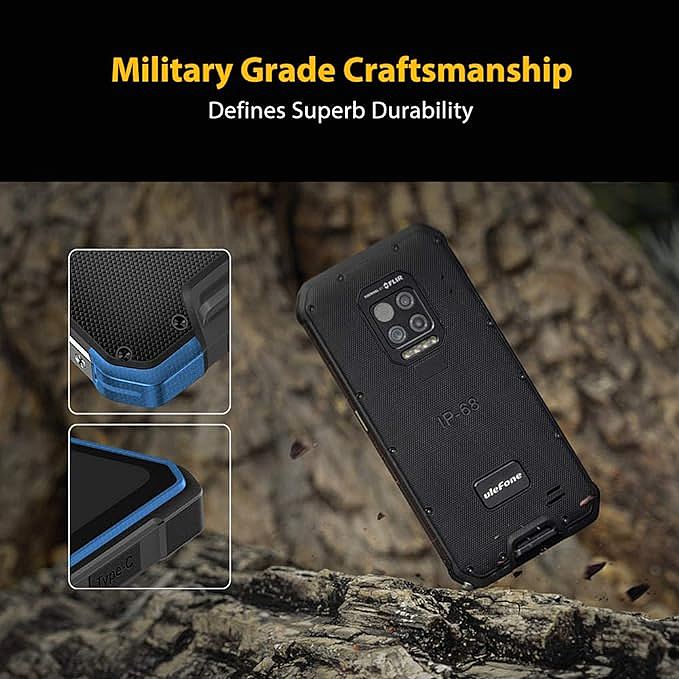
While seeing the unseen is a remarkable feat, it’s useless if the device itself can’t survive the environments where this vision is most needed. This brings us to the engineering of its physical resilience. The spec sheet lists ratings like IP68, IP69K, and MIL-STD-810G, but these alphanumeric codes represent a deep investment in materials and design. The term “waterproof” is often used loosely, but the Ingress Protection (IP) ratings defined by the IEC 60529 standard are precise. The ‘6’ in IP68 signifies it is completely dust-tight. The ‘8’ means it can survive continuous immersion in water, typically specified by the manufacturer as up to 1.5 meters for 30 minutes.
The IP69K rating, however, takes this to another level. It’s a standard developed for applications that require regular, intensive cleaning, like food processing equipment or heavy machinery. It certifies that the device can withstand being sprayed by high-pressure (100 bar) and high-temperature (80°C) water jets from close range without any water ingress. This is a far more violent test than simple submersion and speaks to the integrity of the device’s seals and casing under extreme stress.
Then there is the claim of being “MIL-STD-810G compliant.” This is not a certification but a declaration that the device was designed and tested against the procedures outlined in a massive U.S. military standard document. This standard is a gauntlet of environmental stress tests. While drop protection is the most marketed aspect, MIL-STD-810G includes dozens of methods, such as Method 501.5 for high-temperature exposure and Method 502.5 for low-temperature operation, ensuring the phone can function in a scorching desert or a freezing tundra. It also covers resistance to humidity, vibration, and shock. Building a device to meet these standards requires an entirely different approach to design.
Of course, this level of protection comes with an unspoken but tangible trade-off. The Armor 9 weighs over 320 grams and is 15 millimeters thick. Its body is a composite of aluminum alloy and TPU polycarbonate, designed for impact absorption, not aesthetic elegance. The charging port is protected by a physical rubber flap, a pragmatic choice that some find cumbersome but is essential for maintaining a seal against the high-pressure jets of an IP69K test. You are choosing a tool, not a jewel. This also raises a valid question about long-term value: investing in a physically durable shell for internal electronics that will inevitably face software obsolescence. The justification lies in its role as a tool. For a professional, a device that reliably performs its specialized task for three to four years is a sound investment, valued for its utility rather than its place in the fast-moving consumer electronics cycle.
Extending the Senses: The Simplicity of Endoscope Integration
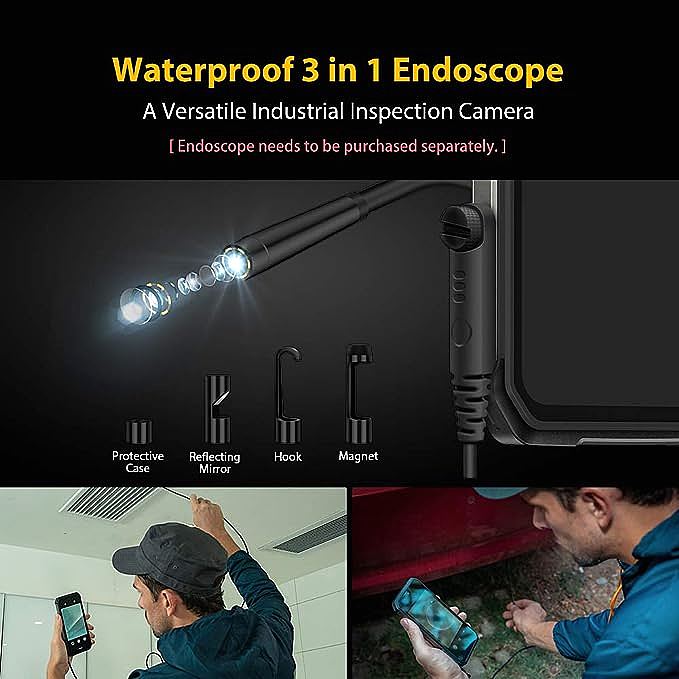
Having built a fortress of a phone that can see heat, the designers added one more trick: the ability to peek into places where no phone, no matter how tough, could physically go. The Armor 9 features a dedicated, proprietary accessory port designed to connect a flexible endoscope. This is a deliberate design choice that speaks to a philosophy of modular capability.
Instead of attempting to build a fragile, complex endoscope camera into the phone itself—a move that would compromise its durability—the functionality is offloaded to an external, purpose-built accessory. The port provides a secure physical and data connection, allowing the phone’s large screen and processing power to act as the brain and display for the endoscope. This approach keeps the core device robust while allowing for specialized expansion. It is a simple, elegant solution for tasks like inspecting inside a wall cavity, a pipe, or the depths of an engine block, turning the phone into a versatile inspection system without sacrificing its fundamental toughness.
Conclusion: A Tool for a New Frontier
The Ulefone Armor 9, when viewed not as a smartphone but as a case study, reveals a fascinating direction in mobile technology. The integration of advanced thermal imaging, the adherence to brutal durability standards, and the allowance for modular tools like an endoscope transform it from a mere communication device into a multi-purpose diagnostic instrument.
Understanding the science behind MSX technology, the precise meaning of IP69K and MIL-STD-810G, and the trade-offs inherent in such a design is key to appreciating its true purpose. The future of the smartphone may not only be about getting thinner and faster but also about becoming more specialized, more capable, and more integrated into the professional workflows of the modern world. For those who operate on this new frontier, the value lies not just in having a smart device, but in having the right tool for the job.