The Science of “Felt” Temperature: Why Humidity Control is Your A/C’s Secret Weapon
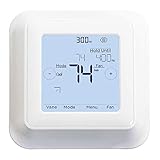
It’s a scene played out in countless homes every summer. You walk in from the sweltering heat, grab the remote, and set the air conditioner to a crisp 26°C (or 72°F). An hour later, the unit is still humming, but the air feels thick, your skin is clammy, and a strange sense of stuffiness pervades the room. You check the thermostat again. It proudly displays 26°C. Is it broken? Or is it lying?
The truth is, your thermostat is telling a truth, but not the whole truth. It’s accurately measuring the dry-bulb temperature of the air. But you, as a human, don’t live by dry-bulb temperature alone. You live in a world of felt temperature, a complex cocktail of heat, moisture, and your own biology. This gap between what the machine reads and what your body feels is the source of endless thermostat battles and surprisingly high energy bills. And the secret ingredient in this cocktail is almost always humidity.

Your Skin’s Built-In Air Conditioner
To understand why humidity is such a game-changer, we first need to appreciate the marvel of engineering that is your own body. Humans are warm-blooded, constantly generating heat. To avoid overheating, we have a primary cooling mechanism that is both simple and brilliant: sweating.
When your body gets too warm, it releases perspiration onto the surface of your skin. The magic happens next. As this moisture evaporates—turning from a liquid to a gas—it requires energy. It pulls this energy, in the form of heat, directly from your skin. This process, known as evaporative cooling, is your personal, highly efficient air conditioner. It’s why you feel a chill after stepping out of a swimming pool, even on a hot day. The water evaporating off your body is actively cooling you down.
But what happens when this finely tuned biological machine sputters? What could possibly stop water from evaporating?
The “Wet Towel” in the Air
Imagine trying to dry a wet towel in a steamy bathroom. It’s not going to work very well, right? The surrounding air is already saturated with water vapor, leaving no “room” for the moisture in the towel to escape.
This is precisely what high humidity does to your body’s cooling system. Humidity is simply a measure of the amount of water vapor in the air. When humidity is high, the air is like that steamy bathroom—it’s already holding a lot of moisture. Consequently, the sweat on your skin can’t evaporate easily. Your internal A/C system effectively grinds to a halt.
You keep sweating, but that sweat just sits on your skin, leading to that sticky, clammy feeling. Your body is working overtime trying to cool down, but getting nowhere. This is why a 30°C day with 90% humidity can feel far more oppressive and dangerous than a 35°C day in a dry desert. The U.S. National Weather Service even quantifies this with the “Heat Index,” which shows how the combination of heat and humidity can make the perceived temperature soar to life-threatening levels.
More Than a Thermometer: The Modern A/C’s “Humidity Eye”
For decades, thermostats were simple devices. They measured temperature, and when it crossed a threshold, they turned the A/C on or off. This is why older systems often create that “cold and clammy” feeling. They might cool the air to the set temperature, but they do little to address the moisture within it.
Modern HVAC systems, especially those connected to advanced controllers like the Mitsubishi Kumo Touch MHK2, are equipped with a crucial piece of technology: a built-in humidity sensor, or hygrometer. This sensor gives the system a second set of “eyes.” It’s no longer just asking, “Is it hot?” It’s also asking, “Is it muggy?”
This is a fundamental shift. By knowing both the temperature and the relative humidity, the system can make much smarter decisions. It understands that achieving true comfort, as defined by standards like ASHRAE 55, isn’t just about hitting a number on the thermometer. It’s about maintaining an environment within a specific “comfort zone” where the interplay of temperature and humidity feels right to the human body.
“Dehumidify” or “Cool”? Decoding Your Remote
So, how does the system use this humidity data? It’s all about the modes on your remote. While your A/C is always removing some humidity as a byproduct of cooling (that’s the water you see dripping from the outdoor unit), dedicated modes can prioritize this function.
- Cool Mode: The primary goal is to lower the temperature as quickly as possible. The compressor and fan run at high speed. It removes humidity, but it’s a secondary effect.
- Dehumidify (or Dry) Mode: The primary goal is to remove moisture. The system runs the cooling coils to condense water vapor, but it operates the fan at a very low speed. This prevents the room from getting too cold, too fast. The air passes over the cold coils slowly, maximizing moisture removal without drastically dropping the temperature.
Using Dry Mode on a muggy but not intensely hot day can be a game-changer. It can make a room feel significantly more comfortable without the energy cost of running the compressor at full blast, potentially leading to energy savings according to studies from research bodies like the Lawrence Berkeley National Laboratory.
Your Three-Step Guide to Beating the Stickiness
Ready to move beyond simply setting a temperature? Here’s how to take control of your home’s comfort:
- Know Your Enemy: Get a simple, inexpensive indoor hygrometer. Understand the baseline humidity in your home. Ideally, for comfort, you want to keep it between 40% and 60%. If you’re consistently seeing numbers above 60%, you have a humidity problem.
- Use the Right Tool: On days that are more “muggy” than “scorching,” experiment with the Dehumidify/Dry mode instead of Cool mode. You might find that a slightly higher temperature with lower humidity feels much more pleasant.
- Think Location: If you use a remote wireless thermostat, ensure it’s placed correctly. Don’t put it in a draft, in direct sunlight, or near the kitchen. You want it to measure the actual living conditions of the room, both temperature and humidity, to give your HVAC system the best possible information to work with.
By understanding that comfort is a duet between temperature and humidity, you can transform your relationship with your air conditioner. It’s no longer a blunt instrument, but a precise tool for creating a genuinely comfortable and efficient home environment.