
The Cellular Science of Nutricosmetics: How Targeted Nutrients Rebuild Hair and Skin from Within
For centuries, the pursuit of vibrant skin and lustrous hair was largely an external affair, confined to topical creams, serums, and rinses. While these applications serve a purpose, a more profound understanding has emerged from the fields of dermatology and nutritional science: the recognition of our skin and hair as dynamic, living organs that are a direct reflection of our internal cellular health. This paradigm shift has given rise to nutricosmetics, a discipline grounded in the principle of “beauty from within.” It moves beyond generalized dietary advice to a more targeted approach, investigating how specific nutrients can influence the biological processes that govern the structure, growth, and resilience of our skin and hair at the most fundamental level. It posits that true, sustainable vitality is not merely applied, but built, cell by cell, from the nourishment we provide.

The Hair Follicle Factory: Understanding the Anagen, Catagen, and Telogen Phases
To appreciate how nutrition impacts hair, one must first view the scalp not as a simple surface, but as a field of highly sophisticated, microscopic factories: the hair follicles. Each follicle operates on a precise, genetically programmed cycle, which is profoundly sensitive to systemic health and nutrient availability. This cycle consists of three main phases. The Anagen phase is the active growth period, where cells in the hair bulb divide rapidly, pushing the hair shaft upward. This energy-intensive process can last for 2-7 years, determining the maximum length of the hair. Following this is the short Catagen phase, a transitional period of about two weeks where the follicle shrinks and detaches from its blood supply. Finally, the follicle enters the Telogen phase, or resting period, which lasts for about three months. At the end of this phase, the old hair is shed, and the follicle re-enters the Anagen phase to begin producing a new one. At any given time, about 85-90% of your hair is in the active growth phase. However, factors like physiological stress, hormonal shifts, and, critically, nutritional deficiencies can prematurely push more follicles into the Telogen phase, leading to noticeable thinning and shedding—a condition known as telogen effluvium.
Fueling the Factory: The Role of Key Nutrients in Keratin Production
Now that we understand the hair follicle’s life cycle as a highly active factory, what are the essential raw materials and energy sources it demands to operate at peak efficiency? The hair shaft itself is primarily composed of a fibrous structural protein called keratin. The synthesis of keratin is a complex biochemical process that relies on a steady supply of specific nutrients.
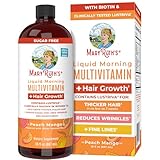
Biotin (Vitamin B7) is perhaps the most well-known “hair vitamin,” and for good reason. It functions as a critical coenzyme for several carboxylase enzymes, which are essential for metabolic processes, including the synthesis of amino acids—the very building blocks of proteins like keratin. A high-potency dose, such as the 10,000 mcg found in some formulations, aims to ensure that these metabolic pathways are not rate-limited by a lack of this key cofactor. Furthermore, the chemical form of biotin matters. Some brands utilize forms like magnesium biotinate, claiming enhanced solubility over standard D-biotin, with the scientific premise that higher solubility can facilitate better absorption in the gastrointestinal tract, thereby increasing its bioavailability to the cells that need it most.
Beyond biotin, other nutrients are vital. Zinc, for instance, plays a crucial role in DNA and RNA production, which is fundamental for the rapid cell division occurring in the Anagen phase. It also helps maintain the oil-secreting glands attached to the follicles, which are essential for scalp health. A deficiency in zinc is strongly correlated with hair loss, underscoring its importance in the follicular factory’s operations.
The Skin’s Support Matrix: Collagen, Elastin, and the Importance of Vitamin C
While the principles of cellular production are similar, the skin’s primary challenge is not just growth, but maintaining structural integrity against the relentless forces of time and environment. This shifts our focus from the hair ‘factory’ to the skin’s complex support ‘matrix’. The dermis, the layer of skin beneath the visible epidermis, is a dense network of proteins, primarily collagen and elastin. Collagen provides strength and firmness, while elastin supplies elasticity and rebound. As we age, the production of these proteins slows down, and existing fibers can be degraded by factors like UV radiation and oxidative stress, leading to wrinkles and sagging.
Nutricosmetics aims to support this matrix from the inside. Vitamin C is an indispensable player here. It is not just a potent antioxidant that protects skin cells from free radical damage; it is an essential cofactor for the enzymes prolyl hydroxylase and lysyl hydroxylase, which are responsible for stabilizing and cross-linking collagen fibers. Without sufficient Vitamin C, the body simply cannot produce stable, functional collagen. This is why a formulation focused on skin health will almost invariably include a meaningful dose of this vitamin. Similarly, proprietary blends like Lustriva, which are clinically studied for their effects on reducing fine lines and wrinkles, often contain a synergistic mix of nutrients, such as bonded arginine silicate and magnesium biotinate, designed to support both vascularity (improving nutrient delivery to the skin) and the foundational building blocks of skin and hair.

Conclusion: The Future of Beauty is Cellular Nutrition
The journey from a simple dietary recommendation to a targeted nutricosmetic formulation represents a significant evolution in our approach to beauty and wellness. It is a move away from superficial fixes towards a deep, biological understanding that our external appearance is a manifestation of our internal cellular vitality. By comprehending the intricate workings of the hair follicle factory and the skin’s structural matrix, we can begin to make more informed choices. The focus shifts from merely consuming “good” ingredients to supplying the specific cofactors, building blocks, and antioxidants that our cells require to perform their programmed functions optimally. While no supplement is a panacea, a well-formulated, scientifically grounded nutricosmetic serves as a tool to ensure our body’s construction crew has all the materials it needs to build and maintain the strongest, most vibrant version of ourselves, truly from the inside out.