
Material Science and All-Terrain Therapy: Restoring the World to the Disabled Dog
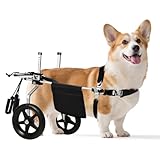
When a dog loses the use of its legs, it loses more than just mobility; it loses its world. A dog’s existence is defined by exploration—the scent of a new trail, the texture of grass, the social exchange at the park. Confinement to a crate or a single room is a form of sensory deprivation that can be as damaging as the physical injury itself.
Restoring this world requires more than just a set of wheels. It requires a vehicle capable of conquering the variables of the environment. This brings us to the intersection of Material Science and Environmental Psychology. A wheelchair must be robust enough to handle the physics of “off-road” travel yet precise enough to function as a seamless extension of the dog’s body.
This article delves into the engineering behind the Virbraroo DW-HLD-2, focusing on the physics of Rolling Resistance, the durability of Aircraft Aluminum, and the profound therapeutic value of Environmental Enrichment. We will explore how re-opening the door to the outdoors is a critical component of holistic rehabilitation.
The Physics of the Wheel: Conquering Terrain
The choice of wheels on a dog wheelchair is not aesthetic; it is a calculation of physics. Specifically, it involves overcoming Rolling Resistance.
Diameter and Obstacle Envelopment
The Virbraroo features Oversized Rugged Wheels. In wheel physics, diameter is king.
* Angle of Attack: When a wheel encounters an obstacle (a rock, a tree root, a sidewalk crack), the “angle of attack” determines how much force is needed to roll over it.
* The Diameter Advantage: A larger wheel has a lower angle of attack. It rolls over obstacles that would stop a smaller wheel dead in its tracks. For a dog powering the chair with only its front legs, this difference is crucial. A small wheel requires a massive burst of energy to clear a bump; a large wheel preserves momentum.
Tire Composition and Traction
The “Rugged” aspect refers to the tread pattern and material density.
* Traction vs. Slip: On smooth floors (hardwood), the tire needs grip to prevent sliding sideways. On loose terrain (sand, gravel), it needs tread to bite into the surface.
* Shock Absorption: The tire material acts as the first layer of the suspension system. A foam-filled or pneumatic-style tire compresses slightly, absorbing the high-frequency vibrations of gravel before they can travel up the frame to the dog’s injured spine. This Vibration Damping is essential for pain management in IVDD patients.
The Fortress of Aluminum: Material Durability
Why use Aircraft-Grade Aluminum? Why not plastic or steel? The answer lies in the Fatigue Limit and Corrosion Resistance.
The Fatigue Limit
Dogs are not gentle machinery. They run, they crash into bushes, they roll over. The frame is subjected to constant cyclic loading—stress that repeats with every step.
* Steel: Has a high fatigue limit but is heavy.
* Aluminum: Modern alloys (like the 6061 often used) are treated to resist fatigue failure. They can endure millions of cycles of vibration and stress without cracking. This reliability is non-negotiable when the device is the only thing holding up a paralyzed animal.
Environmental Resistance
An “All-Terrain” device must withstand the elements.
* Oxidation: Steel rusts. A rusty wheelchair is heavy, squeaky, and prone to failure. Aluminum forms a protective oxide layer that prevents deep corrosion.
* The Wash-Down: Active dogs get muddy. The aluminum construction allows the Virbraroo to be hosed down after a trail run without fear of ruining the frame. This hygiene factor is critical for dogs that may also suffer from incontinence, a common side effect of spinal injuries.
Environmental Enrichment: The Psychology of “Outside”
Why does all this engineering matter? Because of Environmental Enrichment. In veterinary behaviorism, this is the principle that an animal’s mental health depends on the complexity of its environment.
The Olfactory Landscape
A dog’s primary sense is smell. The air inside a house is stagnant. The air outside is a dynamic tapestry of information.
* Cognitive Stimulation: Sniffing a trail is a cognitive workout. It engages the brain, reducing anxiety and boredom.
* The “Sniffari”: For a disabled dog, being able to go on a “Sniffari”—a walk dictated by their nose, not the owner’s pace—is a return to normalcy. The wheelchair enables this. It supports the dog in a standing posture, allowing them to sniff at natural heights, unlike being carried in a sling or stroller.
Social Reintegration
Disability can be isolating. Dogs communicate through body language—posture, tail position, play bows.
* Eye-Level Interaction: A wheelchair puts the dog back at eye level with other dogs. It allows them to interact normally, sniffing and being sniffed.
* Confidence: A dog dragging its legs feels vulnerable. A dog standing in a wheelchair feels capable. This boost in confidence can reduce fear-based aggression and depression.

The image above captures the essence of this therapy. The dog is not focused on its disability; it is focused on the environment. The wheelchair has faded into the background, becoming a seamless enabler of the experience.
The Quality of Life (QoL) Equation
In veterinary medicine, we often discuss the Quality of Life Scale (HHHHHMM scale). Mobility is a central factor.
- Independence: The ability to move without human assistance.
- Hygiene: The ability to stand to eliminate, keeping the body clean.
- Joy: The ability to engage in favorite activities.
The Virbraroo DW-HLD-2 directly improves the score in all these categories. By providing a stable, all-terrain platform, it transforms a “hospice” situation into a “living” situation. It shifts the narrative from “what the dog has lost” to “what the dog can still do.”
Conclusion: Engineering Freedom
The dog wheelchair is a bridge. On one side is the confinement of injury; on the other is the world. Building that bridge requires the rigorous application of physics—large wheels to conquer friction, aluminum alloys to resist fatigue, and adjustable geometry to ensure balance.
But the purpose of the bridge is biological and emotional. It is about restoring the dog-ness of the dog. When we strap a Corgi or a Dachshund into a Virbraroo and watch them take off down a trail, ears flapping in the wind, we are witnessing a medical miracle powered by simple mechanics. We are seeing the restoration of a spirit. The science is in the aluminum and the rubber; the soul is in the freedom they provide.