
The Longevity Loop: Preserving Mobility, Independence, and Cognitive Health in an Aging World
As we age, the conversation around health shifts. In our 20s and 30s, fitness is often about aesthetics and performance—running faster, lifting heavier, looking leaner. But as we enter our 60s, 70s, and beyond, the priority transforms into something far more profound: Independence. The ability to walk to the mailbox, to play with grandchildren, to rise from a chair without assistance. These functional abilities are the true currency of longevity.
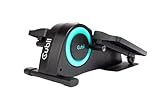
However, a vicious cycle often threatens this independence. Joint pain leads to inactivity; inactivity leads to muscle loss (sarcopenia) and stiffness; stiffness leads to more pain and less movement. Breaking this “Sedentary Cycle of Decline” is the single most important intervention for healthy aging. Enter the era of Accessible Activity. Devices like the Cubii JR1 Under Desk Elliptical are not merely exercise machines; they are tools of empowerment. They offer a safe, sustainable bridge back to movement for those whom traditional exercise has left behind. This article explores the science of “Active Aging,” decoding how low-impact, seated movement preserves our joints, boosts our brains, and secures our freedom.
The Joint Paradox: Motion is Lotion
One of the most persistent myths in aging is that exercise “wears out” our joints, like the tires on a car. People with arthritis often fear movement, believing it will cause further damage. The biological reality is exactly the opposite: Motion is Lotion.
Our joints—specifically the cartilage that cushions our knees and hips—are avascular. This means they have no direct blood supply to deliver nutrients and remove waste. Instead, cartilage relies on a process called Imbibition.
The Mechanism of Synovial Feeding
Think of your cartilage as a sponge. When you bear weight or contract muscles around a joint, the “sponge” is squeezed, expelling waste products into the synovial fluid (the joint’s natural lubricant). When the pressure is released, the sponge expands, sucking in fresh, nutrient-rich synovial fluid.
Without this rhythmic compression and release—without movement—the cartilage starves. It dries out, becomes brittle, and degenerates faster. This is why inactivity is so devastating for arthritis sufferers.
The Cubii JR1 is engineered to facilitate this “feeding mechanism” without the “destructive trauma.” Its elliptical path is Closed Kinetic Chain movement, meaning the foot never leaves the pedal. This eliminates the high-impact “ground reaction forces” of walking or running that can aggravate damaged joints. By providing smooth, continuous motion, the Cubii allows seniors to “oil their joints” for hours a day, stimulating the production of synovial fluid and nourishing the cartilage without pain. It turns the joint from a rusting hinge into a self-lubricating system.
Sarcopenia and the Fight for Muscle Reserve
Alongside joint health, the preservation of muscle mass is the second pillar of independence. Sarcopenia—the age-related loss of muscle tissue—begins as early as age 30 but accelerates dramatically after 60. Weak leg muscles are the primary predictor of falls, which are the leading cause of injury-related death in seniors.
The Safety of Seated Strength Training
For many seniors, building leg strength is a Catch-22. They need to squat or lunge to build muscle, but their balance or joint pain prevents them from doing so safely. The seated nature of the Cubii JR1 resolves this conflict. It removes the element of balance and fall risk from the equation.
By adjusting the 8 levels of resistance, users can engage in progressive overload—the fundamental principle of strength training. Even at moderate resistance, the continuous engagement of the quadriceps, hamstrings, and glutes helps to maintain muscle tone. While it won’t turn a senior into a bodybuilder, it maintains the “functional reserve” necessary for daily tasks like standing up from the toilet or climbing a flight of stairs. It provides a safety net of strength.

The Neuroprotective Effect: Moving the Body to Save the Mind
The benefits of active aging extend far beyond the muscles and joints; they reach deep into the brain. There is a robust and growing body of evidence linking physical activity to the prevention of cognitive decline and dementia.
Blood Flow and Neuroplasticity
The brain is a voracious consumer of oxygen and glucose. As we age, the arteries harden and blood flow to the brain can diminish (cerebral hypoperfusion). Leg movement acts as a second heart. The rhythmic contraction of the large leg muscles pumps blood upward, increasing cerebral blood flow.
This surge of blood delivers Brain-Derived Neurotrophic Factor (BDNF), a protein often described as “fertilizer for the brain.” BDNF promotes Neuroplasticity—the brain’s ability to form new connections and repair itself. It specifically targets the hippocampus, the region responsible for memory and learning, which is often the first to shrink in Alzheimer’s disease.
Using a Cubii while reading, watching the news, or doing crossword puzzles creates a powerful synergy. It combines physical stimulation with cognitive engagement. This “dual-tasking” is increasingly recommended by geriatric neurologists as a way to build a “Cognitive Reserve.” The mindless, rhythmic nature of the elliptical motion allows the brain to focus on the mental task while the body fuels the engine.
The Psychology of Accessibility: Removing the Barriers
For a fitness tool to be effective for the aging population, it must be accessible. Complexity is a barrier. High-tech interfaces, confusing setups, and intimidating gym environments often alienate seniors.
Simplicity as a Feature
The design philosophy of the Cubii JR1 centers on Approachability. It requires no plugging in (LCD runs on battery), no complex programming, and no daunting climb to get onto a seat. The “Step-Through” design of typical recumbent bikes is replaced by simply placing it in front of any existing favorite chair.
This integration into the user’s existing “Comfort Zone” is crucial for habit formation. A senior doesn’t have to “go to the gym”; the gym comes to their living room. The large, readable LCD screen provides immediate, clear feedback without requiring a smartphone connection (though the app is an option for tech-savvy users). This simplicity respects the user’s dignity and reduces the “technological anxiety” that often accompanies modern gadgets.

Case Study: Rehabilitation and Recovery
Beyond general aging, the seated elliptical has found a vital niche in rehabilitation. Whether recovering from knee replacement surgery (TKA), a stroke, or managing conditions like Multiple Sclerosis (MS) or Parkinson’s, movement is often the medicine.
- Stroke Recovery: For stroke survivors with hemiparesis (weakness on one side), the bilateral nature of pedaling can help “teach” the affected side to move again through patterning and repetition, aiding in neuro-rehabilitation.
- Post-Surgery: After knee surgery, regaining Range of Motion (ROM) is critical. The smooth, controlled range of the Cubii allows patients to gently mobilize the knee joint without the jarring impact of walking, reducing scar tissue formation and stiffness.
Conclusion: The Freedom of Movement
In the end, the value of the Cubii JR1 is not measured in calories burned or miles pedaled. It is measured in life lived. It is measured in the ability to say “yes” to a walk in the park, “yes” to a family outing, “yes” to living independently in one’s own home.
By understanding the deep physiological needs of the aging body—for joint lubrication, muscle preservation, and cerebral blood flow—we can see that “Active Aging” is not about defying age, but about adapting to it intelligently. The seated elliptical represents a compassionate, science-backed tool in this journey. It acknowledges the limitations of the aging body while fiercely defending its potential. It proves that as long as we can move, we can thrive.